[Al-Quran 50:6-8] Have they not looked at the heaven above them - how We structured it and adorned it and how it has no rifts? And the earth - We spread it out and cast therein firmly set mountains and made grow therein [something] of every beautiful kind, Giving insight and a reminder for every servant who turns [to Allah].

Showing posts with label Yajuj Majuj. Show all posts

Thursday, November 28, 2024

The Mighty Corrupters of The Earth

 Surah al-Kahf 

92.

ثُمَّ أَتْبَعَ سَبَبًا

Pickthall: Then he followed a road

93.

حَتَّىٰ إِذَا بَلَغَ بَيْنَ السَّدَّيْنِ وَجَدَ مِن دُونِهِمَا قَوْمًا لَّا يَكَادُونَ يَفْقَهُونَ قَوْلًا

Pickthall: Till, when he came between the two mountains, he found upon their hither side a folk that scarce could understand a saying.

94.

قَالُوا يَا ذَا الْقَرْنَيْنِ إِنَّ يَأْجُوجَ وَمَأْجُوجَ مُفْسِدُونَ فِي الْأَرْضِ فَهَلْ نَجْعَلُ لَكَ خَرْجًا عَلَىٰ أَن تَجْعَلَ بَيْنَنَا وَبَيْنَهُمْ سَدًّا

Pickthall: They said: O Dhu'l-Qarneyn! Lo! Gog and Magog are spoiling the land. So may we pay thee tribute on condition that thou set a barrier between us and them?

95.

قَالَ مَا مَكَّنِّي فِيهِ رَبِّي خَيْرٌ فَأَعِينُونِي بِقُوَّةٍ أَجْعَلْ بَيْنَكُمْ وَبَيْنَهُمْ رَدْمًا

Pickthall: He said: That wherein my Lord hath established me is better (than your tribute). Do but help me with strength (of men), I will set between you and them a bank.

96.

آتُونِي زُبَرَ الْحَدِيدِ ۖ حَتَّىٰ إِذَا سَاوَىٰ بَيْنَ الصَّدَفَيْنِ قَالَ انفُخُوا ۖ حَتَّىٰ إِذَا جَعَلَهُ نَارًا قَالَ آتُونِي أُفْرِغْ عَلَيْهِ قِطْرًا

Pickthall: Give me pieces of iron - till, when he had levelled up (the gap) between the cliffs, he said: Blow! - till, when he had made it a fire, he said: Bring me molten copper to pour thereon.

97.

فَمَا اسْطَاعُوا أَن يَظْهَرُوهُ وَمَا اسْتَطَاعُوا لَهُ نَقْبًا

Pickthall: And (Gog and Magog) were not able to surmount, nor could they pierce (it).

98.

قَالَ هَـٰذَا رَحْمَةٌ مِّن رَّبِّي ۖ فَإِذَا جَاءَ وَعْدُ رَبِّي جَعَلَهُ دَكَّاءَ ۖ وَكَانَ وَعْدُ رَبِّي حَقًّا

Pickthall: He said: This is a mercy from my Lord; but when the promise of my Lord cometh to pass, He will lay it low, for the promise of my Lord is true.

99.

 ۞ وَتَرَكْنَا بَعْضَهُمْ يَوْمَئِذٍ يَمُوجُ فِي بَعْضٍ ۖ وَنُفِخَ فِي الصُّورِ فَجَمَعْنَاهُمْ جَمْعًا

Pickthall: And on that day we shall let some of them surge against others, and the Trumpet will be blown. Then We shall gather them together in one gathering.


Surah al-Anbiya


21:95
وَحَرَٰمٌ عَلَىٰ قَرْيَةٍ أَهْلَكْنَـٰهَآ أَنَّهُمْ لَا يَرْجِعُونَ ٩٥

And there is a ban upon any community which We have destroyed: that they shall not return.
— M. Pickthall


21:96
حَتَّىٰٓ إِذَا فُتِحَتْ يَأْجُوجُ وَمَأْجُوجُ وَهُم مِّن كُلِّ حَدَبٍۢ يَنسِلُونَ ٩٦

Until, when Gog and Magog are let loose, and they hasten out of every mound,
— M. Pickthall


The Quran informs us of a future event when the Earth-corrupting Gog Magog (Yajuj Majuj يَأْجُوجَ وَمَأْجُوجَ) will be let loose, and they will descend from every mound (مِّن كُلِّ حَدَبٍۢ يَنسِلُونَ). This event is supposed to occur during the end times, a little before the Promised Hour. 

The Earth will once again be corrupted. 

The Quran twice draws attention to the prior reformation of the Earth: Surah al-A'raf ayaat 56 and 85-86. 

The Quran introduces corruption of the Earth in its first surah: Surah al-Baqarah ayaat 11-12, and 30. When Allah  informed the angels about appointing a Khalifa for the Earth, they were concerned that this Khalifa will cause corruption and shed blood. There are Hadith attributed to Prophet Muhammad  that the Yajuj Majuj are also descendants of Adam عليه السلام. The Yajuj Majuj outnumber other bani Adam by a factor of 999. 


Gog Magog are mighty corrupters, and they have been contained by Dhu-al-Qarnayn, as a mercy by Allah. However, they will be released when the Promised Hour approaches, and they will once again corrupt the Earth. 


Related posts: 


...


...


...


Sunday, July 5, 2020

Dhul-Qarnayn [two horns, two generations, or both]


Purpose 
To learn what the word قَرْنٍ  means in The Hebrew and Aramaic Bible, and The Arabic Quran. 


Full Text  

وَيَسْأَلُونَكَ عَن ذِي الْقَرْنَيْنِ قُلْ سَأَتْلُو عَلَيْكُم مِّنْهُ ذِكْرًا

And they ask thee of Zul Qarnain. Say thou: shall recite unto you of him some mention.
[Al-Quran 18:83, Translation: Daryabadi]
...

قَالُوا يَا ذَا الْقَرْنَيْنِ إِنَّ يَأْجُوجَ وَمَأْجُوجَ مُفْسِدُونَ فِي الْأَرْضِ فَهَلْ نَجْعَلُ لَكَ خَرْجًا عَلَىٰ أَن تَجْعَلَ بَيْنَنَا وَبَيْنَهُمْ سَدًّا

`They said: O Zul-Qarnain verily Yajuj and Majuj are working corruption in the land; shall we then pay thee tribute on condition that thou place between us and them a barrier!
[Al-Quran 18:94, Translation: Daryabadi]


The last story in Surah al-Kahf mentions a person ذِي الْقَرْنَيْنِ in response to a question. 

The Quran uses the word قَرْنٍ to generally mean generations. Variations of the root ق ر ن also lend meaning to words for companion, bound together, capable, accompanying. Of the 23 times it is used as the noun qarn (قَرْن), twenty are translated as generation(s), and thrice is it used for the name of the person ذَا الْقَرْنَيْنِ mentioned in Surah al-Kahf (Q18:83, 86, 94).   

The name or title of this legendary person is important in the context of end times prophecies, especially as regards to Yajuj Majuj, the corrupters (Q18:93-94) who were contained by him behind a metallic wall, and are supposed to be released during the end times (Q18:98-99 || Q21:95-96).

قَالَ هَٰذَا رَحْمَةٌ مِّن رَّبِّي فَإِذَا جَاءَ وَعْدُ رَبِّي جَعَلَهُ دَكَّاءَ وَكَانَ وَعْدُ رَبِّي حَقًّا

وَتَرَكْنَا بَعْضَهُمْ يَوْمَئِذٍ يَمُوجُ فِي بَعْضٍ وَنُفِخَ فِي الصُّورِ فَجَمَعْنَاهُمْ جَمْعًا

He said: this is a mercy from my Lord; then when the promise of my Lord cometh, He shall make it powder, and the promise of my Lord is ever true.
And We shall leave them on that day surging one against anot her and the trumpet shall be blown, and then We shall assemble them together.
[Al-Quran 18:98-99, Translation: Daryabadi]


وَحَرَامٌ عَلَىٰ قَرْيَةٍ أَهْلَكْنَاهَا أَنَّهُمْ لَا يَرْجِعُونَ

حَتَّىٰ إِذَا فُتِحَتْ يَأْجُوجُ وَمَأْجُوجُ وَهُم مِّن كُلِّ حَدَبٍ يَنسِلُونَ

And a ban is laid on every town which We have destroyed, that they Shall not return.
Until when Ya'juj and Ma'juj are let out, and from every mound they are trickling down.
[Al-Quran 21:95-96, Translation: Daryabadi]


And it is binding on a town which We destroy that they shall not return.
Even when Gog and Magog are let loose and they shall break forth from every elevated place.
[Al-Quran 21:95-96, Translation: Shakir]


In an earlier post, I have identified two of the three places he travels to as the North and South polar regions respectively. Imran Hossein, in his YouTube lectures, insists that his name represents two generations. The Bible uses the same word Qaran || Qeren in Hebrew || Aramaic respectively. The Aramaic version occurs ten times in the Book of Daniel, for example
24 'As for the ten horns, out of this kingdom ten kings will arise; and another will arise after them, and he will be different from the previous ones and will subdue three kings.
Daniel, a noble Jew, and later a prophet, was exiled to Babylon after the first destruction of the Temple of Solomon, to serve the King. According to the Book of Daniel, he serves under the Babylonians, the Medians and the Persians. 

Daniel has a series of visions, in which he is shown creatures with horns. In an overview of the Book of Daniel, Chapter 7, it reads: 
 24 And the ten horns of the same kingdom, shall be ten kings: and another shall rise up after them, and he shall be mightier than the former, and he shall bring down three kings. 25 And he shall speak words against the High One, and shall crush the saints of the most High: and he shall think himself able to change times and laws, and they shall be delivered into his hand until a time, and times, and half a time. 

So, it appears that the ten horns in that vision represent the ten generations of that dynasty.    


References


Bible / Bible Studies links


Quran search links


WikipediaBook of Daniel 

YouTube


Last updated on: July 6, 2020

Wednesday, August 6, 2014

Lessons in Surah Al-Kahf (The Cave)

Related posts:

Surah Al-Kahf [Quran Chapter 18]  is a fascinating chapter containing fantastic lessons for patient perseverance in trials of faith, wealth, knowledge and power!   

By drawing attention to scientific phenomenon, [1] [2] [3] [4], discovered by scientists only recently, it seems to me that the underlying, unifying message is that possibility and impossibility are merely limitations of our human minds: for God, nothing is impossible. God calls, guides, promises and delivers!  The trials of faith, wealth, knowledge and power are meant to test the sincerity of belief, trust in God and assurance of the hereafter. Truth triumphs over falsehood, eventually and always! God completely controls and prevails over everything.   

This Surah contains four unique stories with wondrous scientific phenomenon, each with a subterranean reference. In the first story, God delivers the faithful from religious persecution through prolonged sleep in a cave, in the second story, wealth is but a means of trial, and can suffer decline whenever God wills, such as the disappearance of the water of flourishing orchards; in the third, no matter how knowledgable a person is, there is so much of knowledge and wisdom beyond human comprehension, the story begins with the strange phenomenon of a fish returning to the water by a rock; and in the last, containing lessons in how faith complementing power benefits mankind, the powerful Dhu-al-Qarnayn contains the corruption of the land by sealing the opening in between the mountain-sides where the mischief-makers were coming from.    

Surah Al-Kahf contains 110 verses. In the middle of the chapter, verses 54 and 55 read: 
[Al-Quran 18:54-55, translator: Yusuf Ali]: We have explained in detail in this Qur'an, for the benefit of mankind, every kind of similitude: but man is, in most things, contentious. And what is there to keep back men from believing, now that Guidance has come to them, nor from praying for forgiveness from their Lord, but that (they ask that) the ways of the ancients be repeated with them, or the Wrath be brought to them face to face? 

The Trial of Faith
The people were guided to seek refuge in the cave as they were being persecuted for their faith. According to the following verses, the reason for their persecution is their open declaration of faith.

[Al-Quran 18:13-15, translator: Pickthall]: We narrate unto thee their story with truth. Lo! they were young men who believed in their Lord, and We increased them in guidance. And We made firm their hearts when they stood forth and said: Our Lord is the Lord of the heavens and the earth. We cry unto no Allah beside Him, for then should we utter an enormity. These, our people, have chosen (other) gods beside Him though they bring no clear warrant (vouchsafed) to them. And who doth greater wrong than he who inventeth a lie concerning Allah? 

They feared being stoned or forced to change their faith, as the following verse informs us: 

[Al-Quran 18:20, translator: Pickthall]: For they, if they should come to know of you, will stone you or turn you back to their religion; then ye will never prosper. 

God blessed their willing hearts with faith, and then advanced them in guidance and firmness. God showed that God’s promise is true, both of deliverance and of resurrection: that nothing is impossible for God, and just as he caused these people to wake up after sleeping in the cave for 300 years, so will be the resurrection! 

Advice for Believers 
[Al-Quran 18:27-28, translator: Pickthall]: 
And recite that which hath been revealed unto thee of the Scripture of thy Lord. There is none who can change His words, and thou wilt find no refuge beside Him. Restrain thyself along with those who cry unto their Lord at morn and evening, seeking His Countenance; and let not thine eyes overlook them, desiring the pomp of the life of the world; and obey not him whose heart We have made heedless of Our remembrance, who followeth his own lust and whose case hath been abandoned.

The Trial of Wealth 
The intoxication of wealth and might leads one to arrogance and ingratitude. The prosperous owner of the two gardens erroneously assumed that he was infallible, as he states in the following quote: 

[Al-Quran 18:35-36, translator: Pickthall]: And he went into his garden, while he (thus) wronged himself. He said: I think not that all this will ever perish. I think not that the Hour will ever come, and if indeed I am brought back unto my Lord I surely shall find better than this as a resort. 

Then, when he suffered loss, he laments: 
[Al-Quran 18:42, translator: Pickthall]: And his fruit was beset (with destruction). Then began he to wring his hands for all that he had spent upon it, when (now) it was all ruined on its trellises, and to say: Would that I had ascribed no partner to my Lord! 

Advice for Believers 
[Al-Quran 18:45-46, translator: Pickthall]: And coin for them the similitude of the life of the world as water which We send down from the sky, and the vegetation of the earth mingleth with it and then becometh dry twigs that the winds scatter. Allah is able to do all things. Wealth and children are an ornament of the life of the world. But the good deeds which endure are better in thy Lord's sight for reward, and better in respect of hope.

The Trial of Knowledge 
Most people contend faith and belief, questioning God’s mercy and wisdom, arguing that there is too much suffering and pain in this world, which cannot be the work a loving God. However, there is so much that we do not know that it is not possible for us to understand or even rationalise suffering. Yet, it does not become of us to question or judge God. 

[Al-Quran 18:66-70, translator: Shakir]: Musa said to him: Shall I follow you on condition that you should teach me right knowledge of what you have been taught? He said: Surely you cannot have patience with me And how can you have patience in that of which you have not got a comprehensive knowledge? He said: If Allah pleases, you will find me patient and I shall not disobey you in any matter. He said: If you would follow me, then do not question me about any thing until I myself speak to you about it  

In Prophet Moses’ quest to seek knowledge from one endowed with greater knowledge and wisdom, Moses is warned that he will not be able to bear patiently with actions which his knowledge does not compass. Yet, each of the three ‘apparently outrageous’ actions had a rationale behind it. There is simply so much more than what meets the eye! 

[1] The apparent loss caused by the hole in the boat saved it from being seized by the tyrant King. 
[2] The apparent loss of a child was to bless the parents with a better child 
[3] The apparent service of building a wall free-of-charge for people not inclined to charity was actually to protect the treasure of two orphans    

As we are ignorant of many higher truths and facts, we just have to trust God’s Will, hold on to the guidance and patiently persevere. Our responsibility is to faithfully and righteously do deeds which make the world a better place, and accumulate these good deeds for our Hereafter. That's our test, and that's what we are accountable for, playing our role, instead of questioning God and His reasons and methods.  

The Trial of Power 
Dhu-al-Qarnayn had enormous power and access to everywhere on Earth. He travelled to and conquered various lands, and had full authority over the people. He used his power to contain evil and encourage good. A key lesson from Dhu-al-Qarnayn’s handling of the ‘yajuj majuj’ problem is that he used his power to contain corruption of the land, and thereby bring peace to a people suffering lawlessness. 

Elsewhere in the Quran, oppression has been identified as worse than slaughter, and therefore the importance of being prepared in military might and warfare to be able to deter, contain and neutralise corruption and oppression. The purpose of power is  to bring peace to the world, and that is what we should strive for at all levels!  

Caution  
[Al-Quran 18:103-106, translator: Yusuf Ali]: Say: "Shall we tell you of those who lose most in respect of their deeds? "Those whose efforts have been wasted in this life, while they thought that they were acquiring good by their works?” They are those who deny the Signs of their Lord and the fact of their having to meet Him (in the Hereafter): vain will be their works, nor shall We, on the Day of Judgment, give them any weight. That is their reward, Hell, because they rejected Faith, and took My Signs and My Messengers by way of jest. 

Conclusion 
Surah Al-Kahf, which contains references to wondrous phenomenon, sums up the chapter in the  last two verses with the following words: 
[Al-Quran 18:109-110, translator: Pickthall]: Say: Though the sea became ink for the Words of my Lord, verily the sea would be used up before the words of my Lord were exhausted, even though We brought the like thereof to help. Say: I am only a mortal like you. My Lord inspireth in me that your Allah is only One Allah. And whoever hopeth for the meeting with his Lord, let him do righteous work, and make none sharer of the worship due unto his Lord. 


Last updated on: October 10, 2014

Monday, June 9, 2014

Dhu al Qarnayn visited the Polar Regions?


The story of Dhu al Qarnayn is briefly mentioned in eighteenth surah of The Quran, ayaat 83 – 98. The Quran mentions his name/title, and without going into the details of his person or his people,  informs us that he was established in power and had the means to all ends, and thus was able to travel everywhere on Earth

The ayaat about Dhu al Qarnayn’s travels have been variously interpreted, yet continue to perplex many Muslims. These ayaat have also been used by non-Muslims to point out factual inaccuracies in The Quran.  Based upon what we know of the polar regions of the Earth, I think that the first two travels were to the North and South Pole respectively. I’ve also attempted to understand the third travel. My reasoning is as follows: 


Who was Dhu al Qarnayn?

وَيَسْأَلُونَكَ عَن ذِي الْقَرْنَيْنِ ۖ قُلْ سَأَتْلُو عَلَيْكُم مِّنْهُ ذِكْرًا

[Al-Quran 18:83, Translator: Mohammad Sarwar] (Muhammad), they will ask you about Dhu 'l-Qarnayn. Say, "I shall tell you something about him".

‘Dhu al Qarnayn’ is the name or the title/attribute of this person. 

The Quran uses the word قَرْنٍ to generally mean generations. Variations of the root ق ر ن also lend meaning to words for companion, bound together, capable, accompanying. Of the twenty-three times it is used as the noun qarn (قَرْن), twenty are translated as generation(s), and thrice is it used for the name of the person ذَا الْقَرْنَيْنِ mentioned in Surah al-Kahf (Q18:83, 86, 94). More on this at: Dhul-Qarnayn [two horns, two generations, or both] 

One of the meanings of ‘q-r-n’ in Lane’s Lexicon is ‘The part of the head of a human being which in an animal is the place where the horn grows’. ‘Qarnayn’ is the dual form of the noun. Various commentators have interpreted ‘Dhu al Qarnayn’ as the ‘Lord of the Two Horns’ or ‘Possessor of the Two Horns’. 

Based on my interpretation of the subsequent verses, I think Dhu al Qarnayn probably means Lord / Conqueror of the Two Poles, i.e. the polar regions of the Earth, except that he already had this title on the first visit described, as he is being addressed as 'Ya Dha al Qarnain'. However, since he is being addressed by the author of the story, it is also plausible that he was already destined to be the Lord / Conqueror of the Two Poles.


So, may be it means all of the above. 

To continue exploring other details in the subsequent ayaat:  


إِنَّا مَكَّنَّا لَهُ فِي الْأَرْضِ وَآتَيْنَاهُ مِن كُلِّ شَيْءٍ سَبَبًا

[Al-Qur’an 18:84, Translator: Mohammad Sarwar] We had given him great power in the land and all kinds of resources.

According to this ayat, Dhu al Qarnayn must be a legendary person who was established in power and resources, and could reach anywhere on Earth. The last word: ‘sababun’ is variously translated as ‘resources’, ‘road’, ‘way’, ‘ways and means’, ‘means of access’. The Quran seems to use this word in the context of travel in the sky (air or space travel), such as the Pharaoh commissioning the building of صَرْحًا to travel the skies, as in Q40:36 in this screenshot: 

Screenshot from corpus.quran.com

Most of the polar regions of the Earth are inaccessible by land routes. Ships and planes are required to reach most locations. Helicopters and sea planes are the most commonly used modes of travel to connect settlements in present times. 

The subsequent ayaat of Surah al-Kahf go on to describe three specific travels described by some unique distinguishing features. Do we know of any such places? 

First Travel 


 فَأَتْبَعَ سَبَبًا    
   حَتَّىٰ إِذَا بَلَغَ مَغْرِبَ الشَّمْسِ وَجَدَهَا تَغْرُبُ فِي عَيْنٍ حَمِئَةٍ وَوَجَدَ عِندَهَا قَوْمًا ۗ قُلْنَا يَا ذَا الْقَرْنَيْنِ إِمَّا أَن تُعَذِّبَ وَإِمَّا أَن تَتَّخِذَ فِيهِمْ حُسْنًا  
    قَالَ أَمَّا مَن ظَلَمَ فَسَوْفَ نُعَذِّبُهُ ثُمَّ يُرَدُّ إِلَىٰ رَبِّهِ فَيُعَذِّبُهُ عَذَابًا نُّكْرًا  
  وَأَمَّا مَنْ آمَنَ وَعَمِلَ صَالِحًا فَلَهُ جَزَاءً الْحُسْنَىٰ ۖ وَسَنَقُولُ لَهُ مِنْ أَمْرِنَا يُسْرًا  

[Al-Quran 18:85-88, Translator: Yusuf Ali]
85 One (such) way he followed, 
86 Until, when he reached the setting of the sun, he found it set in a spring of murky water: Near it he found a People: We said: "O Zul-qarnain! (thou hast authority,) either to punish them, or to treat them with kindness." 
87 He said: "Whoever doth wrong, him shall we punish; then shall he be sent back to his Lord; and He will punish him with a punishment unheard-of (before). [88] "But whoever believes, and works righteousness,- he shall have a goodly reward, and easy will be his task as We order it by our Command."

This place is described by the following facts: 
  1. the Sun is setting, 
  2. what it is setting in, 
  3. people dwell near there, and 
  4. Dhu al Qarnayn has authority over them.

Disappearing or Setting Sun?
The phrase used is ‘magrib-e-shams’ which can also be interpreted as ‘western Sun’ or ‘disappearing Sun’.

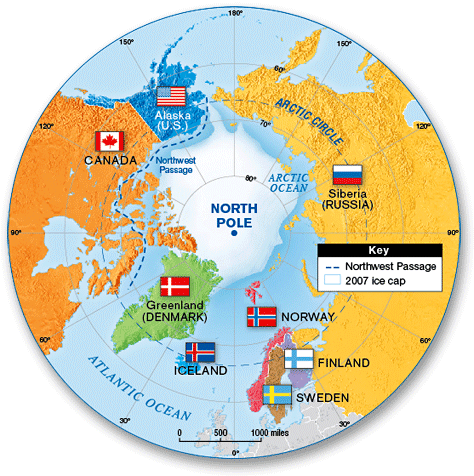
The polar regions of the Earth experience a six-month long day followed by a six-month long night. At the North Pole, ‘In summertime, the sun is always above the horizon at the North Pole, circling the Pole once every day. It is highest in the sky at the Summer Solstice, after which it moves closer to the horizon, until it sinks below the horizon, at the Fall Equinox.’ [1]

Hence, if the North Pole is visited during the few weeks before Fall Equinox, the Sun is in the process of disappearing or setting.

What does the Sun appear to be disappearing in?
‘ainin hamee-atin’ is variously translated as a well or warm spring, or spring with foul fetid mud [2], murky waters, dark mud, and so on [3].

There is no land at the North Pole. ‘The Arctic consists of ocean that is largely surrounded by land. As such, the climate of much of the Arctic is moderated by the ocean water, which can never have a temperature below −2 °C (28 °F).’ [4] 

The lands near the North Pole, in the Arctic Circle, are known for hot springs and geysers, with muddy water spewing out of some [5] [6] [7] [8]. However, such places are also there near the South Pole, though perhaps lesser in number or less discovered [10] [11] [12]. Therefore, hot springs and geysers may not be a uniquely distinguishing feature of the North Pole from the South Pole. Hence, I’m inclined to think that ‘ainin hamee-atin’ refers to the warm waters of the Arctic Ocean.  

Near it he found a people?
The key word is ‘near it’. There are many lands in the Arctic Circle near the Arctic Ocean, where people dwell [13].


[14]

Wikipedia  [15]
European Space Agency [16]

Hence, based upon the three key features: disappearing Sun, warm waters and people near it, I think the only place on Earth that exhibits all three features is the North Pole and the region surrounding it, i.e. the Arctic. 

-------------------------------

Second Travel 


  ثُمَّ أَتْبَعَ سَبَبًا    
  حَتَّىٰ إِذَا بَلَغَ مَطْلِعَ الشَّمْسِ وَجَدَهَا تَطْلُعُ عَلَىٰ قَوْمٍ لَّمْ نَجْعَل لَّهُم مِّن دُونِهَا سِتْرًا    

[Al-Qur’an 18:89-90, Translator: Yusuf Ali] 
89 Then followed he (another) way, 
90 Until, when he came to the rising of the sun, he found it rising on a people for whom We had provided no covering protection against the sun.
  
كَذَ‌ٰلِكَ وَقَدْ أَحَطْنَا بِمَا لَدَيْهِ خُبْرًا

[Al-Qur’an 18:91, Translator: Pickthall] 
91 So (it was). And We knew all concerning him.

The second place is described by three facts: 
  1. that the Sun is rising, 
  2. there are people dwelling there, so it is a land and 
  3. that there is no protection from the Sun, followed by the claim that ‘We knew all...’.

Appearing or Rising Sun?
When there is day in the Northern hemisphere, it is night in the Southern hemisphere.  When the sun finally disappears below the horizon at the North Pole at Autumn Equinox, and the six-month long night starts there, the Sun rises above the horizon at the South Pole, commencing the six-month long day at the South Pole.

People dwelling there? Land?

[33]

We know that there is land at the South Pole, i.e. the continent of Antarctica. Though only research teams stay at Antarctica now [17], however, we cannot rule out if people ever did or did not live in the continent of Antarctica. There do exist some old maps which indicate a warm climate for Antarctica.      

What do we know about natural protection from the Sun?
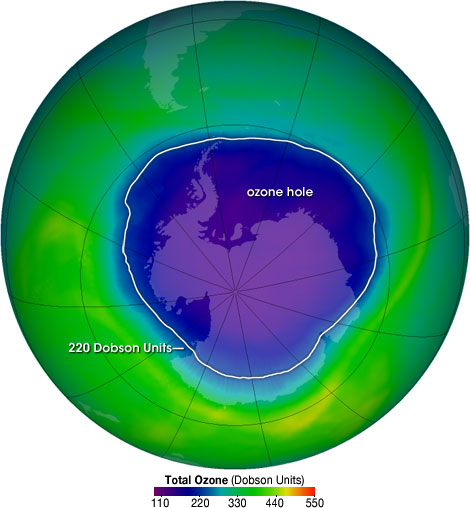
We know that the ozone layer in the atmosphere is a natural protection from the Sun’s harmful rays. We also know that every Antarctic spring, there is a large hole formed in the ozone layer over most of Antarctica.

“The Antarctic Ozone Hole was discovered ... Satellite measurements then confirmed that the springtime ozone loss was a continent-wide feature... The ozone hole is formed each year in the Southern Hemisphere spring (September-November) when there is a sharp decline (currently up to 60%) in the total ozone over most of Antarctica.” [18] 

“The severe depletion of the Antarctic ozone layer known as the “ozone hole” occurs because of the special atmospheric and chemical conditions that exist there and nowhere else on the globe” [19] 

[20]

The ozone depletion over the North Pole is a recent phenomenon, caused due to ‘human’ reasons. Hence, based upon the three key natural features: rising Sun, land and no protection from the Sun, I think the only place on Earth that exhibits all three features is the South Pole and the region surrounding it, i.e. the Antarctic Circle.

-------------------------------

Third Travel 


 ثُمَّ أَتْبَعَ سَبَبًا  
    حَتَّىٰ إِذَا بَلَغَ بَيْنَ السَّدَّيْنِ وَجَدَ مِن دُونِهِمَا قَوْمًا لَّا يَكَادُونَ يَفْقَهُونَ قَوْلًا  
   قَالُوا يَا ذَا الْقَرْنَيْنِ إِنَّ يَأْجُوجَ وَمَأْجُوجَ مُفْسِدُونَ فِي الْأَرْضِ فَهَلْ نَجْعَلُ لَكَ خَرْجًا عَلَىٰ أَن تَجْعَلَ بَيْنَنَا وَبَيْنَهُمْ سَدًّا  
    قَالَ مَا مَكَّنِّي فِيهِ رَبِّي خَيْرٌ فَأَعِينُونِي بِقُوَّةٍ أَجْعَلْ بَيْنَكُمْ وَبَيْنَهُمْ رَدْمًا  
   آتُونِي زُبَرَ الْحَدِيدِ ۖ حَتَّىٰ إِذَا سَاوَىٰ بَيْنَ الصَّدَفَيْنِ قَالَ انفُخُوا ۖ حَتَّىٰ إِذَا جَعَلَهُ نَارًا قَالَ آتُونِي أُفْرِغْ عَلَيْهِ قِطْرًا  
  فَمَا اسْطَاعُوا أَن يَظْهَرُوهُ وَمَا اسْتَطَاعُوا لَهُ نَقْبًا  
   قَالَ هَـٰذَا رَحْمَةٌ مِّن رَّبِّي ۖ فَإِذَا جَاءَ وَعْدُ رَبِّي جَعَلَهُ دَكَّاءَ ۖ وَكَانَ وَعْدُ رَبِّي حَقًّا
وَتَرَكْنَا بَعْضَهُمْ يَوْمَئِذٍ يَمُوجُ فِي بَعْضٍ ۖ وَنُفِخَ فِي الصُّورِ فَجَمَعْنَاهُمْ جَمْعًا   

[Al-Qur’an 18:92-99, Translator: Yusuf Ali] 
92 Then followed he (another) way, 
93 Until, when he reached (a tract) between two mountains, he found, beneath them, a people who scarcely understood a word. 
94 They said: "O Zul-qarnain! the Gog and Magog (People) do great mischief on earth: shall we then render thee tribute in order that thou mightest erect a barrier between us and them? 
95 He said: "(The power) in which my Lord has established me is better (than tribute): Help me therefore with strength (and labour): I will erect a strong barrier between you and them:  
96 "Bring me blocks of iron." At length, when he had filled up the space between the two steep mountain-sides, He said, "Blow (with your bellows)" Then, when he had made it (red) as fire, he said: "Bring me, that I may pour over it, molten lead." [compare translations of Q18:96] 
97 Thus were they made powerless to scale it or to dig through it. 
98 He said: "This is a mercy from my Lord: But when the promise of my Lord comes to pass, He will make it into dust; and the promise of my Lord is true." 
99 On that day We shall leave them to surge like waves on one another: the trumpet will be blown, and We shall collect them all together.

The third place Dhu al Qarnayn arrives at is distinguished by the facts that:
  1. it is between two mountains or barriers
  2. the people did not have understanding or knowledge
  3. they were suffering due to Gog and Magog, who did great mischief on Earth
  4. iron was used and another element was poured over it, the opening was sealed, thereby making them powerless to scale or dig through it.

Space between two barriers?
The word used is ‘alssaddayni’ [root: s-d-d] meaning two barriers. Since the word j-b-l has been used elsewhere in the Qur’an when speaking of mountains, and s-d-d has been used for barrier, hence it is reasonable to assume that here also two barriers are being referred to, and not two mountains.

Who scarcely understood a word? 
‘yafqahoona’ root f-q-h: to possess fiqh means to possess understanding, and knowledge, and intelligence, and especially knowledge of the law [21]. ‘la yakadoona yafqahoona qawlan’ or ‘who scarcely understood a word’ implies, I suppose, that these people were primitive in the sense that they were not organized in terms of religion or society, or were lawless/unable to follow the law/suffering lawlessness (due to terrorism?). The former follows from the fact that these people are in isolation between two barriers, while the latter follows from the fact that, in the subsequent ayaat, they converse with Dhu al Qarnayn, tell him about the mischief being created by Gog and Magog, request a barrier from them, and also offer tribute for the building of such a barrier. Furthermore, they were also able to bring (mine?) iron, and lead or copper alloy, as well as provide the labour.  

Barriers against whom?
Barriers are meant to prevent something or someone from crossing over, i.e. entering or leaving, as the case may be. Dhu al Qarnayn was able to reach this place, thus these barriers did not keep him out. Perhaps, and this is pure speculation, these barriers were not meant to keep out the people on Earth, but rather were meant to seal a ‘portal’ to keep out ‘aliens’ from the sky or below Earth from reaching the Earth’s surface?  

Filled between the ‘l-ṣadafayni’?
‘l-ṣadafayni’ is the dual form of the noun with root s-d-f, meaning mother of pearl as well as two tall structures meeting together or facing each other. [22] I assume then that this was a portal or a breached barrier that needed to be sealed.

Iron covered with molten Copper alloy or Lead? Powerless to scale or dig through it?
Sheets or blocks of Iron were placed to construct/repair the barrier. Then, it was coated with another material, probably to reinforce it and prevent rusting, thus giving it a smooth finish and making it impenetrable.

The word used for this coating material is ‘qitra’, which has been variously translated as Copper [23], Brass [24] and Lead [25].  The same word has been used for the spring of molten liquid that was made available to Solomon [26]. (Interestingly, Iron was made pliable for his father, David [27]) 

Gog and Magog, who did Great Mischief on Earth?
There is mention of and references to these in ancient scriptures and related works [28]. Some have identified them with a particular place/race, while others do not identify them with a particular place or race on Earth. Notable among them is the Hindu mythology, according to which they are hidden from human realm and are probably subterranean [29] [30]

Legends and adventure stories [31] also abound about the inner Earth, of creatures/people dwelling within the Earth. Though modern science refutes ideas about a hollow earth, if there is any figment of truth to any of these accounts, then it is a wonder why we humans have not been able to dig through or find a way to their subterranean civilization, or why they haven’t been able to reach up to the Earth’s surface, unless there exists a natural barrier with only one opening, which was sealed by Dhu al Qarnayn.

Until the Promise comes to Pass?
In The Quran, this expected event is mentioned twice: in Surah 18 (as quoted above), and in Surah 21, ayat 96, ‘Until when [the dam of] Gog and Magog has been opened and they, from every elevation, descend,’ [32]. More on this at: Gog Magog & The City that will Return.  


and Allah ﷻ knows best. 


References & Links 
note [Update 2022]: this blogpost was initially written in 2014, the related references and links' list was compiled ; since then some of the links provided below may no longer be active now  

[21] Lane’s Lexicon Page 2429 
[22] Lane’s Lexicon Page 1666 
[33] Attribution: By TUBS - Own workThis image was created with Adobe Illustrator.This file was uploaded with Commonist. This vector image includes elements that have been taken or adapted from this:  Antarctica (orthographic projection).svg (by TownDown)., CC BY-SA 3.0, https://commons.wikimedia.org/w/index.php?curid=14959356 


Last updated on June 30, 2025