[Al-Quran 50:6-8] Have they not looked at the heaven above them - how We structured it and adorned it and how it has no rifts? And the earth - We spread it out and cast therein firmly set mountains and made grow therein [something] of every beautiful kind, Giving insight and a reminder for every servant who turns [to Allah].

Showing posts with label Moses. Show all posts

Friday, March 7, 2025

The Folding of The Sky

...


وَهَلْ أَتَىٰكَ حَدِيثُ مُوسَىٰٓ ٩

Has there come to you the story of Mūsā?

— T. Usmani

And has there come to you the story of Mûsâ (Moses)?

— Al-Hilali & Khan

إِذْ رَءَا نَارًۭا فَقَالَ لِأَهْلِهِ ٱمْكُثُوٓا۟ إِنِّىٓ ءَانَسْتُ نَارًۭا لَّعَلِّىٓ ءَاتِيكُم مِّنْهَا بِقَبَسٍ أَوْ أَجِدُ عَلَى ٱلنَّارِ هُدًۭى ١٠

When he saw a fire and said to his family, “Stay here. I have noticed a fire. Perhaps I can bring you an ember from it, or find some guidance by the fire.”

— T. Usmani

When he saw a fire, he said to his family: "Wait! Verily, I have seen a fire; perhaps I can bring you some burning brand therefrom, or find some guidance at the fire."

— Al-Hilali & Khan

فَلَمَّآ أَتَىٰهَا نُودِىَ يَـٰمُوسَىٰٓ ١١

So when he came to it, he was called, “O Mūsā,

— T. Usmani

And when he came to it (the fire), he was called by name: "O Mûsâ (Moses)!

— Al-Hilali & Khan

إِنِّىٓ أَنَا۠ رَبُّكَ فَٱخْلَعْ نَعْلَيْكَ ۖ إِنَّكَ بِٱلْوَادِ ٱلْمُقَدَّسِ طُوًۭى ١٢


it is Me, your Lord, so remove your shoes; you are in the sacred valley of Tuwā.

— T. Usmani

"Verily I am your Lord! So take off your shoes; you are in the sacred valley, Tuwa.

— Al-Hilali & Khan

وَأَنَا ٱخْتَرْتُكَ فَٱسْتَمِعْ لِمَا يُوحَىٰٓ ١٣

I have chosen you (for prophet-hood), so listen to what is revealed:

— T. Usmani

"And I have chosen you. So listen to that which will be revealed (to you).

— Al-Hilali & Khan

إِنَّنِىٓ أَنَا ٱللَّهُ لَآ إِلَـٰهَ إِلَّآ أَنَا۠ فَٱعْبُدْنِى وَأَقِمِ ٱلصَّلَوٰةَ لِذِكْرِىٓ ١٤

Surely, I AM ALLAH. There is no god but Myself, so worship Me, and establish Salāh for My remembrance.

— T. Usmani

"Verily! I am Allâh! Lâ ilâha illa Ana (none has the right to be worshipped but I), so worship Me, and perform As-Salât (Iqâmat-as-Salât) for My Remembrance.

— Al-Hilali & Khan

[Al-Quran, Surah Ta Ha, ayaat 9-14]

In Surah Ta Ha, we find the first mention of Tuwa (طُوًۭى), triliteral root ṭā wāw yā (ط و ي) . This root occurs five times in The Quran. The command to worship Allah and establish prayer for His Remembrance is immediately followed by the statement: 

إِنَّ ٱلسَّاعَةَ ءَاتِيَةٌ أَكَادُ أُخْفِيهَا لِتُجْزَىٰ كُلُّ نَفْسٍۭ بِمَا تَسْعَىٰ ١٥

Surely, the Hour (i.e. the Day of Judgment) has to come. I would keep it secret, so that everyone is given a return for the effort one makes.

— T. Usmani

"Verily, the Hour is coming - and I am almost hiding it from Myself - that every person may be rewarded for that which he strives.

— Al-Hilali & Khan

[Al-Quran, Surah Ta Ha, ayaat 15]

The Hour is coming. Allah chooses to keep it hidden. Nobody knows when it will suddenly occur. What is interesting is that the place where Moses (Musa عليه السلام) is meeting Allah سُبْحَانَهُ وَتَعَالَى is the Holy Valley of Tuwa. The root is used for the folding of the sky, as if it is a sheet or a piece of fabric. So, in the next surah, Surah al-Anbya, we read: 

يَوْمَ نَطْوِى ٱلسَّمَآءَ كَطَىِّ ٱلسِّجِلِّ لِلْكُتُبِ ۚ كَمَا بَدَأْنَآ أَوَّلَ خَلْقٍۢ نُّعِيدُهُۥ ۚ وَعْدًا عَلَيْنَآ ۚ إِنَّا كُنَّا فَـٰعِلِينَ ١٠٤

- the Day when We roll up the sky like a scroll rolls up the writings. Just as We originated the first creation, so We shall bring it back again - a promise (undertaken to be binding) on Us. We are sure to do it.

— T. Usmani

And (remember) the Day when We shall roll up the heaven like a scroll rolled up for books. As We began the first creation, We shall repeat it. (It is) a promise binding upon Us. Truly, We shall do it.

— Al-Hilali & Khan

[Al-Quran, Surah al-Anbya, ayaat 104]

Scientists are theorising that information cannot be destroyed, and whatever whoever is doing, all that is happening, all the knowledge being generated is being stored. Every detail is preserved. We have a reckoning coming up. 

The Quran mention The Day when The Hour (ٱلسَّاعَةَ) will be established, and it mentions The Day of Qiyamah (يَوْمَ ٱلْقِيَـٰمَةِ). 

Next, we find the mention of the folded skies (plural) in Surah az-Zumar:

وَمَا قَدَرُوا۟ ٱللَّهَ حَقَّ قَدْرِهِۦ وَٱلْأَرْضُ جَمِيعًۭا قَبْضَتُهُۥ يَوْمَ ٱلْقِيَـٰمَةِ وَٱلسَّمَـٰوَٰتُ مَطْوِيَّـٰتٌۢ بِيَمِينِهِۦ ۚ سُبْحَـٰنَهُۥ وَتَعَـٰلَىٰ عَمَّا يُشْرِكُونَ ٦٧

They did not hold Allah in His true esteem. The whole earth will be in a single grip of His hand on the Day of Doom, and the heavens (will be) rolled up on his right hand. Pure is He, far too higher than what they associate with Him.
— T. Usmani

They made not a just estimate of Allâh such as is due to Him. And on the Day of Resurrection the whole of the earth will be grasped by His Hand[1] and the heavens will be rolled up in His Right Hand.Glorified be He, and High be He above all that they associate as partners with Him!
— Al-Hilali & Khan

[1](V.39:67) See the footnote of (35:41).

[Al-Quran, Surah az-Zumar, ayat 67


On the Day of Qiyamah all the skies will be rolled up in His Right Hand. 

In Surah an-Nazi'at, we again find mention of Moses (Musa عليه السلام) and the Valley of Tuwa:

هَلْ أَتَىٰكَ حَدِيثُ مُوسَىٰٓ ١٥

Has there come to you the narrative about Mūsā?

— T. Usmani

Has there come to you the story of Mûsâ (Moses)?

— Al-Hilali & Khan

إِذْ نَادَىٰهُ رَبُّهُۥ بِٱلْوَادِ ٱلْمُقَدَّسِ طُوًى ١٦

(Recall) when his Lord called to him in the blessed valley of Tuwā:

— T. Usmani

When his Lord called him in the sacred valley of Tûwâ,

— Al-Hilali & Khan

ٱذْهَبْ إِلَىٰ فِرْعَوْنَ إِنَّهُۥ طَغَىٰ ١٧

“Go to Fir‘aun (Pharaoh). Indeed, he has crossed all bounds.

— T. Usmani

Go to Fir‘aun (Pharaoh); verily he has transgressed all bounds (in crimes, sins, polytheism, disbelief).

— Al-Hilali & Khan

فَقُلْ هَل لَّكَ إِلَىٰٓ أَن تَزَكَّىٰ ١٨

And say (to him,) ‘Would you like to purify yourself,

— T. Usmani

And say to him: "Would you purify yourself (from the sin of disbelief by becoming a believer)?"

— Al-Hilali & Khan

وَأَهْدِيَكَ إِلَىٰ رَبِّكَ فَتَخْشَىٰ ١٩

and that I should guide you to your Lord, so that you fear (Him)?’”

— T. Usmani

"And that I guide you to your Lord, so you should fear Him?"

— Al-Hilali & Khan

فَأَرَىٰهُ ٱلْـَٔايَةَ ٱلْكُبْرَىٰ ٢٠

So, he (Mūsā) showed him the biggest sign.

— T. Usmani

Then [Mûsâ (Moses)] showed him the great sign (miracles).

— Al-Hilali & Khan

فَكَذَّبَ وَعَصَىٰ ٢١

But he rejected and disobeyed,

— T. Usmani

But [Fir‘aun (Pharaoh)] belied and disobeyed.

— Al-Hilali & Khan

ثُمَّ أَدْبَرَ يَسْعَىٰ ٢٢

then he turned back, and tried hard (to refute the Messenger),

— T. Usmani

Then he turned his back, striving (against Allâh).

— Al-Hilali & Khan

فَحَشَرَ فَنَادَىٰ ٢٣

then he gathered (his people) and shouted

— T. Usmani

Then he gathered (his people) and cried aloud,

— Al-Hilali & Khan

فَقَالَ أَنَا۠ رَبُّكُمُ ٱلْأَعْلَىٰ ٢٤

and said, “I am your supreme lord.”

— T. Usmani

Saying: "I am your lord, most high."

— Al-Hilali & Khan

فَأَخَذَهُ ٱللَّهُ نَكَالَ ٱلْـَٔاخِرَةِ وَٱلْأُولَىٰٓ ٢٥

So, Allah seized him for an exemplary punishment in the Hereafter and the present world.

— T. Usmani

So Allâh, seized him with punishment for his last and first transgression. [Tafsir At-Tabari]

— Al-Hilali & Khan

إِنَّ فِى ذَٰلِكَ لَعِبْرَةًۭ لِّمَن يَخْشَىٰٓ ٢٦

Indeed, there is a lesson for him who fears (Allah).

— T. Usmani

Verily, in this is an instructive admonition for whosoever fears Allâh.

— Al-Hilali & Khan

ءَأَنتُمْ أَشَدُّ خَلْقًا أَمِ ٱلسَّمَآءُ ۚ بَنَىٰهَا ٢٧

Is your creation more difficult or that of the sky? He has built it,

— T. Usmani

Are you more difficult to create or is the heaven that He constructed?

— Al-Hilali & Khan

[Al-Quran, Surah an-Nazi'at, ayaat 15-27]

...


Also read: 

The Oath by The Afterglow of Sunset 

Northern Lights 

Everything on Record 

Fabric of Spacetime 

The Oaths in Surah alFajr 

    Surah al-Fajr (lists of posts) 


...


...


Thursday, January 19, 2023

Ignorant of The Law of Sacrifice


وَاِذۡ قَالَ مُوۡسٰى لِقَوۡمِهٖۤ اِنَّ اللّٰهَ يَاۡمُرُكُمۡ اَنۡ تَذۡبَحُوۡا بَقَرَةً ​ ؕ قَالُوۡآ اَتَتَّخِذُنَا هُزُوًۡا ​ؕ قَالَ اَعُوۡذُ بِاللّٰهِ اَنۡ اَكُوۡنَ مِنَ الۡجٰـهِلِيۡنَ‏ ٦٧

And [recall] when Moses said to his people, "Indeed, Allāh commands you to slaughter a cow." They said, "Do you take us in ridicule?" He said, "I seek refuge in Allāh from being among the ignorant."

[Al-Quran 2:67, Translation: Saheeh International]

The Bani Israel had sinned: they had taken a الۡعِجۡلَ (calf) for worship (Q2:51). They were commanded to kill their nafs (Q2:54); and then after thirteen ayaat, we read that they were commanded to slaughter a بَقَرَةً (cow / heifer) (Q2:67), probably as a sin offering. They thought Moses (Musa عليه السلام) was joking with them, to which Moses (Musa عليه السلام) responded with the invocation: 

اَعُوۡذُ بِاللّٰهِ اَنۡ اَكُوۡنَ مِنَ الۡجٰـهِلِيۡنَ‏ ...

... I seek refuge in Allāh from being among the ignorant

The Quran uses the triliteral root jīm hā lām (ج ه ل) twenty-four times. ... The words are generally translated as ignorant, ignorance, or synonyms of these words. 

The Torah was revealed to Moses (Musa عليه السلام), and The Injeel to Jesus (Isa عليه السلام), and The Quran to Muhammad  . Each revelation contains Allah ﷻ 's Laws: 

وَاَنۡزَلۡنَاۤ اِلَيۡكَ الۡكِتٰبَ بِالۡحَـقِّ مُصَدِّقًا لِّمَا بَيۡنَ يَدَيۡهِ مِنَ الۡكِتٰبِ وَمُهَيۡمِنًا عَلَيۡهِ​ فَاحۡكُمۡ بَيۡنَهُمۡ بِمَاۤ اَنۡزَلَ اللّٰهُ وَلَا تَتَّبِعۡ اَهۡوَآءَهُمۡ عَمَّا جَآءَكَ مِنَ الۡحَـقِّ​ؕ لِكُلٍّ جَعَلۡنَا مِنۡكُمۡ شِرۡعَةً وَّمِنۡهَاجًا ​ؕ وَلَوۡ شَآءَ اللّٰهُ لَجَـعَلَـكُمۡ اُمَّةً وَّاحِدَةً وَّلٰـكِنۡ لِّيَبۡلُوَكُمۡ فِىۡ مَاۤ اٰتٰٮكُمۡ فَاسۡتَبِقُوا الۡخَـيۡـرٰتِ​ؕ اِلَى اللّٰهِ مَرۡجِعُكُمۡ جَمِيۡعًا فَيُنَبِّئُكُمۡ بِمَا كُنۡتُمۡ فِيۡهِ تَخۡتَلِفُوۡنَۙ‏  ٤٨ 

وَاَنِ احۡكُمۡ بَيۡنَهُمۡ بِمَاۤ اَنۡزَلَ اللّٰهُ وَلَا تَتَّبِعۡ اَهۡوَآءَهُمۡ وَاحۡذَرۡهُمۡ اَنۡ يَّفۡتِنُوۡكَ عَنۡۢ بَعۡضِ مَاۤ اَنۡزَلَ اللّٰهُ اِلَيۡكَ​ؕ فَاِنۡ تَوَلَّوۡا فَاعۡلَمۡ اَنَّمَا يُرِيۡدُ اللّٰهُ اَنۡ يُّصِيۡبَهُمۡ بِبَـعۡضِ ذُنُوۡبِهِمۡ​ؕ وَاِنَّ كَثِيۡرًا مِّنَ النَّاسِ لَفٰسِقُوۡنَ‏ ٤٩ 

اَفَحُكۡمَ الۡجَـاهِلِيَّةِ يَـبۡغُوۡنَ​ؕ وَمَنۡ اَحۡسَنُ مِنَ اللّٰهِ حُكۡمًا لِّـقَوۡمٍ يُّوۡقِنُوۡنَ‏ ٥٠

And We have revealed to you, [O Muḥammad], the Book [i.e., the Qur’ān] in truth, confirming that which preceded it of the Scripture and as a criterion over it. So judge between them by what Allāh has revealed and do not follow their inclinations away from what has come to you of the truth. To each of you We prescribed a law and a method. Had Allāh willed, He would have made you one nation [united in religion], but [He intended] to test you in what He has given you; so race to [all that is] good. To Allāh is your return all together, and He will [then] inform you concerning that over which you used to differ.

And judge, [O Muḥammad], between them by what Allāh has revealed and do not follow their inclinations and beware of them, lest they tempt you away from some of what Allāh has revealed to you. And if they turn away - then know that Allāh only intends to afflict them with some of their [own] sins. And indeed, many among the people are defiantly disobedient.

Then is it the judgement of [the time of] ignorance they desire? But who is better than Allāh in judgement for a people who are certain [in faith].

[Al-Quran 5:48-50, Translation: Saheeh International]


Offering as a means of Nearness to Allah

The first animal sacrifice recorded in the scriptures is that offered by the two sons of Adam. It was accepted of one of them, and rejected from the other: 

۞ وَاتۡلُ عَلَيۡهِمۡ نَبَاَ ابۡنَىۡ اٰدَمَ بِالۡحَـقِّ​ۘ اِذۡ قَرَّبَا قُرۡبَانًا فَتُقُبِّلَ مِنۡ اَحَدِهِمَا وَلَمۡ يُتَقَبَّلۡ مِنَ الۡاٰخَرِؕ قَالَ لَاَقۡتُلَـنَّكَ​ؕ قَالَ اِنَّمَا يَتَقَبَّلُ اللّٰهُ مِنَ الۡمُتَّقِيۡنَ‏ ٢٧

And recite to them the story of Adam's two sons, in truth, when they both made an offering [to Allāh], and it was accepted from one of them but was not accepted from the other. Said [the latter], "I will surely kill you." Said [the former], "Indeed, Allāh only accepts from the righteous [who fear Him].

[Al-Quran 5:27, Translation: Saheeh International]

The Quran does not go into the details of why they were offering the sacrifice, but it does indicate that it was meant as a source of nearness to Allah    by the word قَرَّبَا (come near?) before the word قُرۡبَانًا (means of nearness?). The triliteral root qāf rā bā (ق ر ب) occurs 96 times in the Quran, translated in terms of nearness, closeness, relationship, brought close, ...  such as spending in Q9:99

وَمِنَ الۡاَعۡرَابِ مَنۡ يُّؤۡمِنُ بِاللّٰهِ وَالۡيَوۡمِ الۡاٰخِرِ وَيَتَّخِذُ مَا يُنۡفِقُ قُرُبٰتٍ عِنۡدَ اللّٰهِ وَصَلَوٰتِ الرَّسُوۡلِ​ؕ اَلَاۤ اِنَّهَا قُرۡبَةٌ لَّهُمۡ​ؕ سَيُدۡخِلُهُمُ اللّٰهُ فِىۡ رَحۡمَتِهٖ​ ؕ اِنَّ اللّٰهَ غَفُوۡرٌ رَّحِيۡمٌ‏  ٩٩

وَالسّٰبِقُوۡنَ الۡاَوَّلُوۡنَ مِنَ الۡمُهٰجِرِيۡنَ وَالۡاَنۡصَارِ وَالَّذِيۡنَ اتَّبَعُوۡهُمۡ بِاِحۡسَانٍ ۙ رَّضِىَ اللّٰهُ عَنۡهُمۡ وَرَضُوۡا عَنۡهُ وَاَعَدَّ لَهُمۡ جَنّٰتٍ تَجۡرِىۡ تَحۡتَهَا الۡاَنۡهٰرُ خٰلِدِيۡنَ فِيۡهَاۤ اَبَدًا​ ؕ ذٰ لِكَ الۡـفَوۡزُ الۡعَظِيۡمُ‏ ١٠٠

But among the bedouins are some who believe in Allāh and the Last Day and consider what they spend as means of nearness to Allāh and of [obtaining] invocations of the Messenger. Unquestionably, it is a means of nearness for them. Allāh will admit them to His mercy. Indeed, Allāh is Forgiving and Merciful.

And the first forerunners [in the faith] among the Muhājireen and the Anṣār and those who followed them with good conduct - Allāh is pleased with them and they are pleased with Him, and He has prepared for them gardens beneath which rivers flow, wherein they will abide forever. That is the great attainment.

[Al-Quran 9:99-100, Translation: Saheeh International]

Surah at-Taubah is about waging war along with the Prophet Muhammad  against the Meccans who had persecuted them for their faith, and after two decades of invitation to accept Islam, they had been served notice of war. This required people to spend for the war preparations, as well as participating in the war, putting their lives in danger. 

However, common usage and understanding of the word Qurban(i) is the sacrifice of an animal. 

In Q5:27, we see a strange link between slaughtering an animal and the killing of a person: when the offering made by one brother is accepted, and not from the other, the other kills the brother whose offering was accepted. This narration about Adam's two sons is followed by the decree for the Bani Israel that:    

مِنۡ اَجۡلِ ذٰ لِكَ​ ۛ ۚ كَتَبۡنَا عَلٰى بَنِىۡۤ اِسۡرَآءِيۡلَ اَنَّهٗ مَنۡ قَتَلَ نَفۡسًۢا بِغَيۡرِ نَفۡسٍ اَوۡ فَسَادٍ فِى الۡاَرۡضِ فَكَاَنَّمَا قَتَلَ النَّاسَ جَمِيۡعًا ؕ وَمَنۡ اَحۡيَاهَا فَكَاَنَّمَاۤ اَحۡيَا النَّاسَ جَمِيۡعًا ​ؕ وَلَـقَدۡ جَآءَتۡهُمۡ رُسُلُنَا بِالۡبَيِّنٰتِ ثُمَّ اِنَّ كَثِيۡرًا مِّنۡهُمۡ بَعۡدَ ذٰ لِكَ فِى الۡاَرۡضِ لَمُسۡرِفُوۡنَ‏ ٣٢

Because of that, We decreed upon the Children of Israel that whoever kills a soul unless for a soul or for corruption [done] in the land - it is as if he had slain mankind entirely. And whoever saves one - it is as if he had saved mankind entirely. And Our messengers had certainly come to them with clear proofs. Then indeed many of them, [even] after that, throughout the land, were transgressors.

[Al-Quran 5:32, Translation: Saheeh International]

Abraham (Ibrahim عليه السلام) is the patriarch of Jews, Christians and Muslims (Q2:135, Q2:140, Q6:161, Q19:58, Q22:78). He was of the same religious beliefs (مِنۡ شِيۡعَتِهٖ) as Noah (Nuh عليه السلام) (Q37:83)

In the narrations about Abraham (Ibrahim عليه السلام), we read about the roasted calf (Q11:69, Q51:26) he served the honoured guests, when they suddenly arrived, unannounced. This means that the roast had already been prepared...  

Prior to this visit, we read about his vision to sacrifice his son Ismael (Ismail عليه السلام), to which both father and son willingly submitted, and Allah  graciously substituted an animal just as he was about to slaughter his son: 

فَلَمَّا بَلَغَ مَعَهُ السَّعۡىَ قَالَ يٰبُنَىَّ اِنِّىۡۤ اَرٰى فِى الۡمَنَامِ اَنِّىۡۤ اَذۡبَحُكَ فَانْظُرۡ مَاذَا تَرٰى​ؕ قَالَ يٰۤاَبَتِ افۡعَلۡ مَا تُؤۡمَرُ​ سَتَجِدُنِىۡۤ اِنۡ شَآءَ اللّٰهُ مِنَ الصّٰبِرِيۡنَ‏ ١٠٢

فَلَمَّاۤ اَسۡلَمَا وَتَلَّهٗ لِلۡجَبِيۡنِ​ۚ‏ ١٠٣

وَنَادَيۡنٰهُ اَنۡ يّٰۤاِبۡرٰهِيۡمُۙ‏ ١٠٤

قَدۡ صَدَّقۡتَ الرُّءۡيَا ​ ​ۚ اِنَّا كَذٰلِكَ نَجۡزِى الۡمُحۡسِنِيۡنَ‏ ١٠٥

اِنَّ هٰذَا لَهُوَ الۡبَلٰٓؤُا الۡمُبِيۡنُ‏ ١٠٦

وَفَدَيۡنٰهُ بِذِبۡحٍ عَظِيۡمٍ‏ ١٠٧

And when he reached with him [the age of] exertion, he said, "O my son, indeed I have seen in a dream that I [must] sacrifice you, so see what you think." He said, "O my father, do as you are commanded. You will find me, if Allāh wills, of the steadfast."

And when they had both submitted and he put him down upon his forehead,

We called to him, "O Abraham,

You have fulfilled the vision." Indeed, We thus reward the doers of good.

Indeed, this was the clear trial.

And We ransomed him with a great sacrifice,

[Al-Quran 37:102-107, Translation: Saheeh International]


So, there does seem to be a scriptural link between saving human lives, and slaughtering an animal as an offering instead. 

Symbolically, the putting down of the forehead on the ground, as in prayer, like Ishmael (Ismail عليه السلام), is a means of seeking  nearness to Allah ﷻ.   

Surah al-Alaq, which begins with the command to read (Q96:1), concludes with the command to not obey the person who forbids or prevents from praying (Q96:9-10), but rather prostrate and draw near (Q96:19):

اِقۡرَاۡ بِاسۡمِ رَبِّكَ الَّذِىۡ خَلَقَ​ۚ‏ ١

Recite in the name of your Lord who created

...

كَلَّاؕ لَا تُطِعۡهُ وَاسۡجُدۡ وَاقۡتَرِبْ ١٩

No! Do not obey him. But prostrate and draw near [to Allāh].

[Al-Quran 96, Translation: Saheeh International]


All thanks and praise to Allah عزوجل, muslims daily prostrate in prayers, and they also offer the annual sacrifice by slaughtering an animal, and sharing the meat. 

The jews stopped prostrating publicly, and sacrificing animals, after their temple in Jerusalem was destroyed. Their public prostration is limited to some annual occasion now, while few jews do prostrate in their private prayers, according to online search results. 


Revisiting Moses (Musa عليه السلام)'s invocation quoted in Q2:67, which is the first quoted dua in The Quran: 

اَعُوۡذُ بِاللّٰهِ اَنۡ اَكُوۡنَ مِنَ الۡجٰـهِلِيۡنَ‏ ...

... I seek refuge in Allāh from being among the ignorant

Moses (Musa عليه السلام) seeks refuge from being among the ignorant ones. So, there is an element of ignorance in not willing to slaughter for the sake of Allah. From the ayat that follow, we learn that the Bani Israel were unwilling to slaughter a cow, they kept asking questions to evade the command, yet eventually, they did slaughter the cow that was clearly identified to them.  

So, since the time of Adam's sons, there seems to exist some 'law' whereby there is a established tradition of seeking nearness to Allah through offering a sacrifice. Moreover, the piety or willing intention of the person is also a key factor in the acceptance of the offer.  

اَفَغَيۡرَ اللّٰهِ اَبۡتَغِىۡ حَكَمًا وَّهُوَ الَّذِىۡۤ اَنۡزَلَ اِلَيۡكُمُ الۡـكِتٰبَ مُفَصَّلاً​ ؕ وَالَّذِيۡنَ اٰتَيۡنٰهُمُ الۡـكِتٰبَ يَعۡلَمُوۡنَ اَنَّهٗ مُنَزَّلٌ مِّنۡ رَّبِّكَ بِالۡحَـقِّ​ فَلَا تَكُوۡنَنَّ مِنَ الۡمُمۡتَرِيۡنَ‏ ١١٤

[Say], "Then is it other than Allāh I should seek as judge while it is He who has revealed to you the Book [i.e., the Qur’ān] explained in detail?" And those to whom We [previously] gave the Scripture know that it is sent down from your Lord in truth, so never be among the doubters.

[Al-Quran 6:114, Translation: Saheeh International]


...


References & Links 

The Sin Offering (Chabad.org) 

Qurban (Islamic ritual sacrifice) (Wikipedia) 


Related post in this blog: Forehead , Thunderbolts , The Blessing of Cattle  


Last updated on: May 30, 2024


Wednesday, November 2, 2022

Protection from (fear of) ar-Rahab

 ...

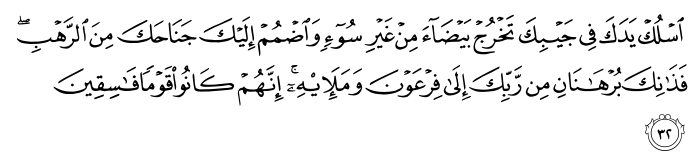
[Al-Quran 28:32:14] 

The Bible and The Quran both mention Rahab. In The Quran, Surah al-Qasas, ayat 32, Moses (Musa عليه السلام) is given a means of protection from Rahab: 

Insert your hand into the opening of your garment; it will come out white, without disease. And draw in your arm close to you [as prevention] from fear, for those are two proofs from your Lord to Pharaoh and his establishment. Indeed, they have been a people defiantly disobedient."

[Al-Quran 28:32, Translator: Sahih International] 

Generally, in translations of The Quran, we find words formed from the root rā hā bā (ر ه ب) translated as fear, terrify, and monks. So, we don't realise that its informing us of a real monstrous creature, that is mentioned in the earlier scriptures, and which is expected to appear again during end times. 

The Bible mentions the Rahab (רהב) in Isaiah 51:9 

. . . Was it not you who cut Rahab to pieces, who pierced that monster through? Was it not you who dried up the sea, the waters of the great deep, who made a road in the depths of the sea so that the redeemed might cross over?

Isaiah 51:9 

[quoted from Rahab and Monster]

Psalm 89:9-10 praises The Lord in these words: 

You rule the raging of the sea;

when its waves rise, you still them.

You crushed Rahab like a carcass;

you scattered your enemies with your mighty arm.

[quoted from Crushing Rahab: Does the Old Testament Borrow from Myth?]


In the Jewish Encyclopedia, it states about RAHAB [as on November 3, 2022]:

Originally a mythical name designating the abyss or the sea; subsequently applied to Egypt. Job ix. 13 and xxvi. 12 indicate that it is an alternative for "Tiamat," the Babylonian name of the dragon of darkness and chaos; Ps. lxxxix. 9 also indicates that "Rahab" is a name applied to the sea-monster, the dragon. According to a sentence preserved in the Talmud, "Rahab" is the name of the demon, the ruler of the sea ("Sar shel Yam"; B. B. 74b). It is used as a designation for Egypt in Ps. lxxxvii. 4 and Isa. xxx. 7. Similarly, in Isa. li. 9, which alludes to the exodus from Egypt, the destruction of Pharaoh is described as a smiting of the great sea-monster Rahab or the dragon Tannin. The juxtaposition of "Rahab" and "Tannin" in this passageexplains why "Rahab" was used as a designation for Egypt, which was otherwise called "Tannin" (see Ezek. xxix. 3, Hebr.). It must be noted that the Jewish exegetes deprived the word "Rahab" of its mythological character, and explained it as merely an equivalent for "arrogance," "noise," or "tumult"—applied both to the roaring of the sea and to the arrogant noisiness and proud boasting of the Egyptians (comp. Abraham ibn Ezra on Ps. lxxxvii. 4 and lxxxix. 9).


Quoting the following from Book of Job, someone asks what Rahab means: 

“God will not turn back his anger;

    beneath him bowed the helpers of Rahab.

—Job 9:13 (ESV)


By his power he stilled the sea;

    by his understanding he shattered Rahab.

—Job 26:12 (ESV)  

[quoted from Who or what is Rahab in Job?]


It seems clear that Rahab is the name of an ancient sea monster, which an association with Ancient Egypt. The Bani Israel were aware of this monster, and so its not surprising that the very first ayat (Q2:40) addressing the Bani Israel in The Quran employs the same root: 


The first narrative about Adam's khilafat, and Iblis' arrogant refusal to accept it; the warning about Iblis after exposing his arrogance; Adam and his wife falling into Iblis' trap and suffering loss; Adam's repentance; being expelled from The Garden, temporarily, with the assurance of God's Guidance, and that those who heed it will not suffer, and those who disbelieve and belie the signs will be companions of the fire forever; is mentioned from Q2:31 through Q2:39. The very next ayat immediately addresses the Bani Israel, who were saved from Pharaoh, the sea was parted for them to cross safely, and after their Exodus from Egypt, they were granted The Torah, and God took a covenant from them:      

O Children of Israel, remember My favor which I have bestowed upon you and fulfill My covenant [upon you] that I will fulfill your covenant [from Me], and be afraid of [only] Me.
[Al-Quran 2:40, Translator: Sahih International] 

The Quran use of words is fascinating. There are other Arabic words in The Quran which are also translated as fear, so its amazing that God chose the word sharing the same root rā hā bā (ر ه ب) to remind the Bani Israel that God Almighty is the only one to be in awe of.  

So, across the scriptures, from The Torah to The Quran, we find Rahab mentioned.   

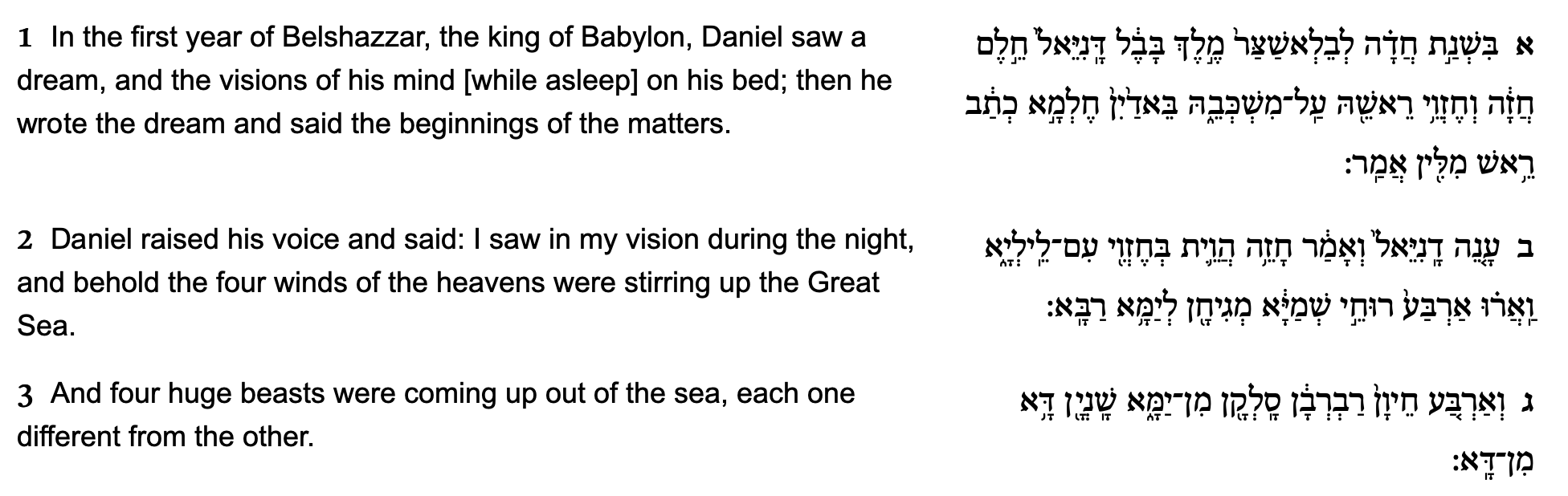
The Book of Daniel, Chapter 7, mentions four beasts rising from the sea: 

[from a Christian website]: 

Daniel’s Dream of Four Beasts

7 

In the first year of Belshazzar king of Babylon, Daniel had a dream, and visions passed through his mind as he was lying in bed. He wrote down the substance of his dream.

2 Daniel said: “In my vision at night I looked, and there before me were the four winds of heaven churning up the great sea. 3 Four great beasts, each different from the others, came up out of the sea.

... 

[copied from Daniel 7 NIV, Biblegateway]

[from a Jewish website]:

...


[screenshots from Daniel 7, Ketuvim - Scriptures]


........................................

Have those who disbelieved not considered that the heavens and the earth were a joined entity, and We separated them and made from water every living thing? Then will they not believe?
[Al-Quran 21:30, Translator: Sahih International] 

........................................

In the NEWS

As the world is increasingly attracted to, and embracing polytheism, strange news from the sea are making the rounds. On the one hand, as evidence builds up for huge walls of water swallowing up entire ships, the other news is of photographs of 'faces' in huge waves: 


References & Links 

Word Morphology 28:32:14 [The Quranic Arabic Corpus]

Quran Dictionary root word [The Quranic Arabic Corpus] 


Rahab and Monster 

Crushing Rahab: Does the Old Testament Borrow from Myth? 

RAHAB [Jewish Encyclopedia]

Rahab (term) [Wikipedia] 

Who or what is Rahab in Job? [Stack Exchange] 


Last updated on: September 10, 2024


Thursday, May 6, 2021

Seventy Men & The Torah in Seventy Languages

Abstract 

The Quran mentions that Moses (Musa عليه السلام) chose seventy men from his people for The Appointment, after he had received the Tablets on which were inscribed guidance and mercy. It also reminds them about the covenant they ratified with Allah.

At the time of Moses (Musa عليه السلام), there existed seventy primary languages, of seventy nations, in the world. 

At the appointment with the seventy men, when Moses (Musa عليه السلام) prayed for mercy (Q7:155-156), these ayat recount the answer Allah gave him: ... 

In Devarim - Deuteronomy 18, Moses (Musa عليه السلام) informed them that from their brothers, Allah will set up a prophet like him. The Bani Israel trace their lineage to Isaac (Ishaque عليه السلام), the son of Abraham (Ibrahim عليه السلام), while the Arabs trace their lineage to Ishmael (Ismail عليه السلام), the elder son of Abraham (Ibrahim عليه السلام). So, Muhammad  is from their brothers. 


Full Text 

 ۞ وَوَاعَدْنَا مُوسَىٰ ثَلَاثِينَ لَيْلَةً وَأَتْمَمْنَاهَا بِعَشْرٍ فَتَمَّ مِيقَاتُ رَبِّهِ أَرْبَعِينَ لَيْلَةً ۚ وَقَالَ مُوسَىٰ لِأَخِيهِ هَارُونَ اخْلُفْنِي فِي قَوْمِي وَأَصْلِحْ وَلَا تَتَّبِعْ سَبِيلَ الْمُفْسِدِينَ

وَلَمَّا جَاءَ مُوسَىٰ لِمِيقَاتِنَا وَكَلَّمَهُ رَبُّهُ قَالَ رَبِّ أَرِنِي أَنظُرْ إِلَيْكَ ۚ قَالَ لَن تَرَانِي وَلَـٰكِنِ انظُرْ إِلَى الْجَبَلِ فَإِنِ اسْتَقَرَّ مَكَانَهُ فَسَوْفَ تَرَانِي ۚ فَلَمَّا تَجَلَّىٰ رَبُّهُ لِلْجَبَلِ جَعَلَهُ دَكًّا وَخَرَّ مُوسَىٰ صَعِقًا ۚ فَلَمَّا أَفَاقَ قَالَ سُبْحَانَكَ تُبْتُ إِلَيْكَ وَأَنَا أَوَّلُ الْمُؤْمِنِينَ

قَالَ يَا مُوسَىٰ إِنِّي اصْطَفَيْتُكَ عَلَى النَّاسِ بِرِسَالَاتِي وَبِكَلَامِي فَخُذْ مَا آتَيْتُكَ وَكُن مِّنَ الشَّاكِرِينَ

وَكَتَبْنَا لَهُ فِي الْأَلْوَاحِ مِن كُلِّ شَيْءٍ مَّوْعِظَةً وَتَفْصِيلًا لِّكُلِّ شَيْءٍ فَخُذْهَا بِقُوَّةٍ وَأْمُرْ قَوْمَكَ يَأْخُذُوا بِأَحْسَنِهَا ۚ سَأُرِيكُمْ دَارَ الْفَاسِقِينَ

And We appointed (for) Musa thirty nights and We completed them with ten (more), so was completed (the) set term (of) his Lord (of) forty night(s). And said Musa to his brother Harun, "Take my place in my people, and do right and (do) not follow (the) way (of) the corrupters."
And when came Musa to Our appointed place and spoke to him his Lord, he said, "O my Lord! Show me (that) I may look at You." He said, "Never you (can) see Me, but look at the mountain [then] if it remains in its place then you see Me." But when revealed (His) Glory his Lord to the mountain, He made it crumbled to dust and fell down Musa unconscious. And when he recovered he said, "Glory be to You! I turn (in repentance) to you, and I am (the) first (of) the believers."
He said, "O Musa! Indeed, I have chosen you over the people with My Messages and with My words. So take what I have given you and be among the grateful."

And We ordained (laws) for him in the tablets - of every thing, an instruction and explanation for every thing, "So take them with firmness and order your people (to) take (the) best of it. I will show you (the) home (of) the defiantly disobedient

[Al-Quran 7:142-145]

Backstory: Allah liberated the Bani Israel from the oppression they were suffering in Ancient Egypt. This event is famously known as the Exodus, in which Allah parted the sea, so that they could escape to the other side, while their enemy, pursuing them, were drowned in the same sea.  

While Moses (Musa عليه السلام) was away (Q7:142), his people took up the calf for worship (Q7:148). After Moses (Musa عليه السلام)' anger calmed (Q7:154), he chose seventy men for The Appointment (Q7:155). The ayat mentions that they were seized with an earthquake (الرَّجْفَةُ): 

وَلَمَّا سَكَتَ عَن مُّوسَى الْغَضَبُ أَخَذَ الْأَلْوَاحَ ۖ وَفِي نُسْخَتِهَا هُدًى وَرَحْمَةٌ لِّلَّذِينَ هُمْ لِرَبِّهِمْ يَرْهَبُونَ

وَاخْتَارَ مُوسَىٰ قَوْمَهُ سَبْعِينَ رَجُلًا لِّمِيقَاتِنَا ۖ

 فَلَمَّا أَخَذَتْهُمُ الرَّجْفَةُ قَالَ رَبِّ لَوْ شِئْتَ أَهْلَكْتَهُم مِّن قَبْلُ وَإِيَّايَ ۖ أَتُهْلِكُنَا بِمَا فَعَلَ السُّفَهَاءُ مِنَّا ۖ إِنْ هِيَ إِلَّا فِتْنَتُكَ تُضِلُّ بِهَا مَن تَشَاءُ وَتَهْدِي مَن تَشَاءُ ۖ أَنتَ وَلِيُّنَا فَاغْفِرْ لَنَا وَارْحَمْنَا ۖ وَأَنتَ خَيْرُ الْغَافِرِينَ

And when was calmed from Musa the anger, he took (up) the tablets and in their inscription (was) guidance and mercy for those who [they] of their Lord (are) fearful.

And chose Musa (from) his people seventy men for Our appointment. 

Then when seized them the earthquake he said, "O my Lord! If you (had) willed, You (could) have destroyed the from before and me. Would You destroy us for what did the foolish among us? Not it (was) but Your trial, You let go astray by it whom You will and You guide whom You will. You (are) our Protector, so forgive us and have mercy upon us, and You (are) Best (of) Forgivers.

[Al-Quran 154-155]

The Quran mentions that Moses (Musa عليه السلام) chose seventy men from his people for The Appointment, after he had received the Tablets on which were inscribed guidance and mercy. It also reminds them about the covenant they ratified with Allah:

وَقَطَّعْنَاهُمْ فِي الْأَرْضِ أُمَمًا ۖ مِّنْهُمُ الصَّالِحُونَ وَمِنْهُمْ دُونَ ذَ‌ٰلِكَ ۖ وَبَلَوْنَاهُم بِالْحَسَنَاتِ وَالسَّيِّئَاتِ لَعَلَّهُمْ يَرْجِعُونَ

فَخَلَفَ مِن بَعْدِهِمْ خَلْفٌ وَرِثُوا الْكِتَابَ يَأْخُذُونَ عَرَضَ هَـٰذَا الْأَدْنَىٰ وَيَقُولُونَ سَيُغْفَرُ لَنَا وَإِن يَأْتِهِمْ عَرَضٌ مِّثْلُهُ يَأْخُذُوهُ ۚ أَلَمْ يُؤْخَذْ عَلَيْهِم مِّيثَاقُ الْكِتَابِ أَن لَّا يَقُولُوا عَلَى اللَّهِ إِلَّا الْحَقَّ وَدَرَسُوا مَا فِيهِ ۗ وَالدَّارُ الْآخِرَةُ خَيْرٌ لِّلَّذِينَ يَتَّقُونَ ۗ أَفَلَا تَعْقِلُونَ

وَالَّذِينَ يُمَسِّكُونَ بِالْكِتَابِ وَأَقَامُوا الصَّلَاةَ إِنَّا لَا نُضِيعُ أَجْرَ الْمُصْلِحِينَ

 ۞ وَإِذْ نَتَقْنَا الْجَبَلَ فَوْقَهُمْ كَأَنَّهُ ظُلَّةٌ وَظَنُّوا أَنَّهُ وَاقِعٌ بِهِمْ خُذُوا مَا آتَيْنَاكُم بِقُوَّةٍ وَاذْكُرُوا مَا فِيهِ لَعَلَّكُمْ تَتَّقُونَ

And We divided them in the earth (as) nations. Among them (are) the righteous and among them (are) other than that. And We tested them with the good and the bad, so that they may return.

Then succeeded from after them successors (who) inherited the Book taking goods (of) this the lower (life) and they say, "It will be forgiven for us." And if comes to them goods similar to it they will take it. Was not taken on them Covenant (of) the Book that not they will say about Allah except the truth while they studied what (is) in it? And the home (of) the Hereafter (is) better for those who fear Allah. So will not you use intellect?
And those who hold fast to the Book, and establish the prayer, indeed, We (will) not [We] let go waste (the) reward (of) the reformers.
And when We raised the mountain above them as if it was a canopy and they thought that it (would) fall upon them, (We said), "Take what We have given you with strength and remember what (is) in it so that you may fear Allah."
[Al-Quran 168-171]

The Ratified Covenant: Q2:40 exhorts the Bani Israel to uphold the covenant they made with Allah, so that Allah upholds His Covenant with them. Q2:63 goes on to mention the ratified covenant taken from them:

وَإِذْ أَخَذْنَا مِيثَاقَكُمْ وَرَفَعْنَا فَوْقَكُمُ الطُّورَ خُذُوا مَا آتَيْنَاكُم بِقُوَّةٍ وَاذْكُرُوا مَا فِيهِ لَعَلَّكُمْ تَتَّقُون

And when We took your covenant and We raised over you the mount, "Hold what We have given you with strength, and remember what (is) in it, perhaps you (would become) righteous."
[Al-Quran 2:63]


وَإِذْ أَخَذَ اللَّهُ مِيثَاقَ الَّذِينَ أُوتُوا الْكِتَابَ

لَتُبَيِّنُنَّهُ لِلنَّاسِ وَلَا تَكْتُمُونَهُ 

فَنَبَذُوهُ وَرَاءَ ظُهُورِهِمْ وَاشْتَرَوْا بِهِ ثَمَنًا قَلِيلًا فَبِئْسَ مَا يَشْتَرُونَ

And when Allah took a Covenant (from) those who were given the Book,
"You certainly make it clear to the mankind and (do) not conceal it.
Then they threw it behind their backs and they exchanged [with] it (for) a little price. And wretched (is) what they purchase.
[Al-Quran 3:187]

Q7:169 also reminds them of the covenant ratified with them, and Q7:171 reminds them of the raising of the mount over them. 
Related Post: The Covenant & Its Ratification 


The Torah on Seventy Men 

טזוַיֹּ֨אמֶר יְהֹוָ֜ה אֶל־משֶׁ֗ה אֶסְפָה־לִּ֞י שִׁבְעִ֣ים אִישׁ֘ מִזִּקְנֵ֣י יִשְׂרָאֵל֒ אֲשֶׁ֣ר יָדַ֔עְתָּ כִּי־הֵ֛ם זִקְנֵ֥י הָעָ֖ם וְשֹֽׁטְרָ֑יו וְלָֽקַחְתָּ֤ אֹתָם֙ אֶל־אֹ֣הֶל מוֹעֵ֔ד וְהִתְיַצְּב֥וּ שָׁ֖ם עִמָּֽךְ:

יזוְיָֽרַדְתִּ֗י וְדִבַּרְתִּ֣י עִמְּךָ֘ שָׁם֒ וְאָֽצַלְתִּ֗י מִן־הָר֛וּחַ אֲשֶׁ֥ר עָלֶ֖יךָ וְשַׂמְתִּ֣י עֲלֵיהֶ֑ם וְנָֽשְׂא֤וּ אִתְּךָ֙ בְּמַשָּׂ֣א הָעָ֔ם וְלֹֽא־תִשָּׂ֥א אַתָּ֖ה לְבַדֶּֽךָ:

16 Then the Lord said to Moses, "Assemble for Me seventy men of the elders of Israel, whom you know to be the people's elders and officers, and you shall take them to the Tent of Meeting, and they shall stand there with You.  

17 I will come down and speak with you there, and I will increase the spirit that is upon you and bestow it upon them. Then they will bear the burden of the people with you so that you need not bear it alone.
[The Torah, Bamidbar - Numbers - Chapter 11 16-17]

Though the narrative in Numbers 11 regarding what led up to the choosing of the seventy elders is different, yet both The Torah and The Quran are pointing towards the same event when seventy men were chosen from the Bani Israel. The purpose stated in Numbers 11 17 is so that they will share the burden along with Moses (Musa عليه السلام). 

The mission of Moses (Musa عليه السلام) was the proclamation that there is no god but Allah, the One and Only God, and the conveyance of The Torah which is a message from God containing detailed information, guidance and mercy. 


The Torah in Seventy Languages  

Summary of impressions from Jewish and Christian writings online: At the time of Moses (Musa عليه السلام), there existed seventy primary languages, of seventy nations, in the world. It is believed that these seventy languages originated at the Tower of Babel:

טעַל־כֵּ֞ן קָרָ֤א שְׁמָהּ֙ בָּבֶ֔ל כִּי־שָׁ֛ם בָּלַ֥ל יְהֹוָ֖ה שְׂפַ֣ת כָּל־הָאָ֑רֶץ וּמִשָּׁם֙ הֱפִיצָ֣ם יְהֹוָ֔ה עַל־פְּנֵ֖י כָּל־הָאָֽרֶץ:

Therefore, He named it Babel, for there the Lord confused the language of the entire earth, and from there the Lord scattered them upon the face of the entire earth.
[Bereishit - Genesis - Chapter 11:9]

They also believe that all the seventy languages were spoken in the Pharaoh's palace in ancient Egypt, which means that these were the extant languages then. Where in Devarim - Deuteronomy - Chapter 1:5 Moses (Musa عليه السلام) spoke, it is believed that he gave them The Torah in all the seventy languages of the world:

הבְּעֵ֥בֶר הַיַּרְדֵּ֖ן בְּאֶ֣רֶץ מוֹאָ֑ב הוֹאִ֣יל משֶׁ֔ה בֵּאֵ֛ר אֶת־הַתּוֹרָ֥ה הַזֹּ֖את לֵאמֹֽר:

On that side of the Jordan, in the land of Moab, Moses commenced [and] explained this Law, saying,
[Devarim - Deuteronomy - Chapter 1:8]

It is believed that the Devarim - Deuteronomy is one long sermon by Moses (Musa عليه السلام), a renewal of the covenant! He also commanded them to inscribe it all clearly on stones:

אוַיְצַ֤ו משֶׁה֙ וְזִקְנֵ֣י יִשְׂרָאֵ֔ל אֶת־הָעָ֖ם לֵאמֹ֑ר שָׁמֹר֙ אֶת־כָּל־הַמִּצְוָ֔ה אֲשֶׁ֧ר אָֽנֹכִ֛י מְצַוֶּ֥ה אֶתְכֶ֖ם הַיּֽוֹם:

And Moses and the elders of Israel commanded the people, saying, Observe all of the commandment that I command you this day.

...

חוְכָתַבְתָּ֣ עַל־הָֽאֲבָנִ֗ים אֶת־כָּל־דִּבְרֵ֛י הַתּוֹרָ֥ה הַזֹּ֖את בַּאֵ֥ר הֵיטֵֽב:   

You shall write upon the stones all the words of this Torah, very clearly.
[
Devarim - Deuteronomy - Chapter 27:1, ..., 8]


The Quran in Arabic Language

وَمَا قَدَرُوا اللَّهَ حَقَّ قَدْرِهِ إِذْ قَالُوا مَا أَنزَلَ اللَّهُ عَلَىٰ بَشَرٍ مِّن شَيْءٍ قُلْ مَنْ أَنزَلَ الْكِتَابَ الَّذِي جَاءَ بِهِ مُوسَىٰ نُورًا وَهُدًى لِّلنَّاسِ تَجْعَلُونَهُ قَرَاطِيسَ تُبْدُونَهَا وَتُخْفُونَ كَثِيرًا وَعُلِّمْتُم مَّا لَمْ تَعْلَمُوا أَنتُمْ وَلَا آبَاؤُكُمْ قُلِ اللَّهُ ثُمَّ ذَرْهُمْ فِي خَوْضِهِمْ يَلْعَبُون

وَهَٰذَا كِتَابٌ أَنزَلْنَاهُ مُبَارَكٌ مُّصَدِّقُ الَّذِي بَيْنَ يَدَيْهِ وَلِتُنذِرَ أُمَّ الْقُرَىٰ وَمَنْ حَوْلَهَا وَالَّذِينَ يُؤْمِنُونَ بِالْآخِرَةِ يُؤْمِنُونَ بِهِ وَهُمْ عَلَىٰ صَلَاتِهِمْ يُحَافِظُون

And (did) not they appraise Allah (with) true (his) appraisal, when they said, "Not revealed Allah on a human being [of] anything." Say, "Who revealed the Book which brought [it] Musa (as) a light and guidance for the people? You make it (into) parchments, you disclose (some of) it and you conceal much (of it). And you were taught what not knew you and not your forefathers." Say, "Allah (revealed it)." Then leave them in their discourse - playing.
And this (is) a Book, We have revealed it, blessed, confirming which (from) between his hands, so that you may warn (the) mother (of) the cities and who (are) around it. And those who believe in the Hereafter, they believe in it, and they, over their prayers (are) guarding.
[Al-Quran 6:91-92]


كِتَابٌ فُصِّلَتْ آيَاتُهُ قُرْآنًا عَرَبِيًّا لِّقَوْمٍ يَعْلَمُون

A Book, are detailed its Verses, a Quran (in) Arabic for a people (who) know,
...

وَلَوْ جَعَلْنَاهُ قُرْآنًا أَعْجَمِيًّا لَّقَالُوا لَوْلَا فُصِّلَتْ آيَاتُهُ أَأَعْجَمِيٌّ وَعَرَبِيٌّ قُلْ هُوَ لِلَّذِينَ آمَنُوا هُدًى وَشِفَاءٌ وَالَّذِينَ لَا يُؤْمِنُونَ فِي آذَانِهِمْ وَقْرٌ وَهُوَ عَلَيْهِمْ عَمًى أُولَٰئِكَ يُنَادَوْنَ مِن مَّكَانٍ بَعِيد

 And if We (had) made it a Quran (in) a foreign (language), they (would have) said, "Why not are explained in detail its verses? (Is it) a foreign (language) and an Arab?" Say, "It (is) for those who believe, a guidance and a healing." And those who (do) not believe, in their ears (is) deafness, and it (is) for them blindness. Those are being called from a place far."
[Al-Quran 41:3, ..., 44]


وَكَذَٰلِكَ أَوْحَيْنَا إِلَيْكَ قُرْآنًا عَرَبِيًّا لِّتُنذِرَ أُمَّ الْقُرَىٰ وَمَنْ حَوْلَهَا وَتُنذِرَ يَوْمَ الْجَمْعِ لَا رَيْبَ فِيهِ فَرِيقٌ فِي الْجَنَّةِ وَفَرِيقٌ فِي السَّعِير

And thus We have revealed to you a Quran (in) Arabic, that you may warn (the) mother (of) the towns, and whoever (is) around it, and warn (of the) Day (of) Assembly, (there is) no doubt in it. A party (will be) in Paradise and a party in the Blazing Fire.
[Al-Quran 42:7]


وَمِن قَبْلِهِ كِتَابُ مُوسَىٰ إِمَامًا وَرَحْمَةً وَهَٰذَا كِتَابٌ مُّصَدِّقٌ لِّسَانًا عَرَبِيًّا لِّيُنذِرَ الَّذِينَ ظَلَمُوا وَبُشْرَىٰ لِلْمُحْسِنِين

And from before it (was the) Scripture (of) Musa (as) a guide and a mercy. And this (is) a Book confirming, (in) language Arabic to warn those who do wrong and glad tidings for the good-doers.
[Al-Quran 46:12]

The Quran informs us that it was revealed in the Arabic language to warn the mother of towns (أُمَّ الْقُرَىٰ), i.e. Makkah (old name Bakkah), and those around it. Almost all of Middle East speaks Arabic, including Egypt.  

Related Posts: The Quran, the Pharaoh, Exodus and the Promised Day! || The Ancient House


Muhammad : A Prophet like Moses

At the appointment with the seventy men, when Moses prayed for mercy (Q7:155-156), these ayat recount the answer Allah gave him:

 ۞ وَاكْتُبْ لَنَا فِي هَـٰذِهِ الدُّنْيَا حَسَنَةً وَفِي الْآخِرَةِ إِنَّا هُدْنَا إِلَيْكَ ۚ قَالَ عَذَابِي أُصِيبُ بِهِ مَنْ أَشَاءُ ۖ وَرَحْمَتِي وَسِعَتْ كُلَّ شَيْءٍ ۚ فَسَأَكْتُبُهَا لِلَّذِينَ يَتَّقُونَ وَيُؤْتُونَ الزَّكَاةَ وَالَّذِينَ هُم بِآيَاتِنَا يُؤْمِنُونَ

الَّذِينَ يَتَّبِعُونَ الرَّسُولَ النَّبِيَّ الْأُمِّيَّ الَّذِي يَجِدُونَهُ مَكْتُوبًا عِندَهُمْ فِي التَّوْرَاةِ وَالْإِنجِيلِ يَأْمُرُهُم بِالْمَعْرُوفِ وَيَنْهَاهُمْ عَنِ الْمُنكَرِ وَيُحِلُّ لَهُمُ الطَّيِّبَاتِ وَيُحَرِّمُ عَلَيْهِمُ الْخَبَائِثَ وَيَضَعُ عَنْهُمْ إِصْرَهُمْ وَالْأَغْلَالَ الَّتِي كَانَتْ عَلَيْهِمْ ۚ فَالَّذِينَ آمَنُوا بِهِ وَعَزَّرُوهُ وَنَصَرُوهُ وَاتَّبَعُوا النُّورَ الَّذِي أُنزِلَ مَعَهُ ۙ أُولَـٰئِكَ هُمُ الْمُفْلِحُونَ

And ordain for us in this [the] world, good and in the Hereafter. Indeed, we we have turned to You." He said, "My punishment - I afflict with it whom I will, but My Mercy encompasses every thing. So I will ordain it for those who (are) righteous and give zakah and those who [they] in Our Verses believe.
Those who follow the Messenger, the Prophet, the unlettered, whom they find him written with them in the Taurat and the Injeel. He commands them to the right and forbids them from the wrong, and he makes lawful for them the pure things and makes unlawful for them the impure things and he relieves from them their burden and the fetters which were upon them. So those who believe in him and honor him, and help him and follow the light which has been sent down with him. Those (are) [they] the successful ones."
[Al-Quran 7:156-157]

In Surah al-Muzzamil, we read: 

إِنَّا أَرْسَلْنَا إِلَيْكُمْ رَسُولًا شَاهِدًا عَلَيْكُمْ كَمَا أَرْسَلْنَا إِلَىٰ فِرْعَوْنَ رَسُولًا

فَعَصَىٰ فِرْعَوْنُ الرَّسُولَ فَأَخَذْنَاهُ أَخْذًا وَبِيلًا

فَكَيْفَ تَتَّقُونَ إِن كَفَرْتُمْ يَوْمًا يَجْعَلُ الْوِلْدَانَ شِيبًا

السَّمَاءُ مُنفَطِرٌ بِهِ ۚ كَانَ وَعْدُهُ مَفْعُولًا

إِنَّ هَـٰذِهِ تَذْكِرَةٌ ۖ فَمَن شَاءَ اتَّخَذَ إِلَىٰ رَبِّهِ سَبِيلًا

Indeed, We [We] have sent to you a Messenger (as) a witness upon you, as We sent to Firaun a Messenger.
But disobeyed Firaun the Messenger, so We seized him (with) a seizure ruinous.
Then how will you guard yourselves, if you disbelieve, a Day (that) will make the children gray-haired?
The heaven (will) break apart therefrom, is His Promise to be fulfilled.
Indeed, this (is) a Reminder, then whoever wills (let him) take to his Lord a way.
[Al-Quran 73:15-19]

In Devarim - Deuteronomy 18, Moses (Musa عليه السلام) informed them that from their brothers, Allah will set up a prophet like him. 

The Bani Israel trace their lineage to Isaac (Ishaque عليه السلام), the son of Abraham (Ibrahim عليه السلام), while the Arabs trace their lineage to Ishmael (Ismail عليه السلام), the elder son of Abraham (Ibrahim عليه السلام). So, Muhammad  is from their brothers: 

  טונָבִ֨יא מִקִּרְבְּךָ֤ מֵֽאַחֶ֨יךָ֙ כָּמֹ֔נִי יָקִ֥ים לְךָ֖ יְהֹוָ֣ה אֱלֹהֶ֑יךָ אֵלָ֖יו תִּשְׁמָעֽוּן:

A prophet from among you, from your brothers, like me, the Lord, your God will set up for you; you shall hearken to him.
[Devarim - Deuteronomy - Chapter 18 15]

The Devarim - Deuteronomy concludes thus: 

יוְלֹא־קָ֨ם נָבִ֥יא ע֛וֹד בְּיִשְׂרָאֵ֖ל כְּמשֶׁ֑ה אֲשֶׁר֙ יְדָע֣וֹ יְהֹוָ֔ה פָּנִ֖ים אֶל־פָּנִֽים:

And there was no other prophet who arose in Israel like Moses, whom the Lord knew face to face,

יאלְכָל־הָֽ֨אֹתֹ֜ת וְהַמּֽוֹפְתִ֗ים אֲשֶׁ֤ר שְׁלָחוֹ֙ יְהֹוָ֔ה לַֽעֲשׂ֖וֹת בְּאֶ֣רֶץ מִצְרָ֑יִם לְפַרְעֹ֥ה וּלְכָל־עֲבָדָ֖יו וּלְכָל־אַרְצֽוֹ:

11as manifested by all the signs and wonders, which the Lord had sent him to perform in the land of Egypt, to Pharaoh and all his servants, and to all his land,  

יבוּלְכֹל֙ הַיָּ֣ד הַֽחֲזָקָ֔ה וּלְכֹ֖ל הַמּוֹרָ֣א הַגָּד֑וֹל אֲשֶׁר֙ עָשָׂ֣ה משֶׁ֔ה לְעֵינֵ֖י כָּל־יִשְׂרָאֵֽל:

12and all the strong hand, and all the great awe, which Moses performed before the eyes of all Israel. [Devarim - Deuteronomy - Chapter 34 10-12]

Related Posts: Muhammad , the Messenger of Allah || Muhammad – Ascension & Return 


Mistranslations & Misinterpretations 

This is a link to an audio why a not divinely-authorised Greek translation (a Greek Pharaoh of Egypt had commissioned the translation) was considered a tragedy of the same magnitude as the worship of the golden calf: Audio length 48:35 

Questions: 

  • why did they translate another version when the original Greek translation given by Moses existed? 
  • do the seventy original translations of The Torah still exist?  

With the translations of the ayaat of The Quran also, we notice that there are differences, even within the same language. Sometimes, almost none of the translations are literal, or partially literal. Therefore, it is imperative to quote the ayaat in the original language as well, even while many readers may be interested, or able to understand, only the translations.  

Note: Part of the reason for this blog is that I find what's written in the Arabic text seems different from popular understanding. However, I'm neither a man, nor a messenger of Allah, nor a prophet, nor a religious scholar. Am I doing a service by trying to understand, and share my learnings, or is this a disservice? Or exceeding the bounds defined for the female believer? May Allah guide us all, and improve our submission to Him, and accept us. 


Last updated on: November 14, 2022


Wednesday, December 30, 2020

The Serpent & The Snake: a Clear Sign


  قُلْ هُوَ اللَّهُ أَحَدٌ
اللَّهُ الصَّمَدُ
لَمْ يَلِدْ وَلَمْ يُولَدْ
وَلَمْ يَكُن لَّهُ كُفُوًا أَحَدٌ

Say, "He (is) Allah, the One.
Allah, the Eternal, the Absolute.
Not He begets and not He is begotten.
And not is for Him equivalent any [one]."
[Al-Quran 112]


The Quran uses separate words for serpents and snakes:
Screenshot from corpus.quran.com

Screenshot from corpus.quran.com

Stick, Snake, Serpent 

The Quran explicitly mentions that the first clear sign that Allah  gave to Moses (Musa عليه السلام) was the snake and the serpent. In His conversation with Moses (Musa عليه السلام), Allah  asked him to throw his stick, and it turned into a snake. When Allah  sent him to the Pharaoh to show him the clear sign, it turned into a serpent. In both cases, when Moses (Musa عليه السلام) picked up the creature, it turned back into a stick. 


Like unto the Pharaoh

The Quran is replete with lessons from the confrontations between Moses (Musa عليه السلام) and the Pharaoh, and so is the Torah / Bible. The Quran explicitly states that we have been sent a Messenger witness upon us, just as a Messenger was sent to the Pharaoh (Q73:15). Pharaoh disobeyed and was ruined (Q73:16). A terrible day is approaching which we will not be able to ward off, if we disbelieve and do not heed to the Message and the Messenger (Q73:17-18).  

From Adam's story in the scriptures, we are familiar with the evil Satan who caused Adam's fall. 

Serpents feature not only in Egyptian mythology, but also is several mythologies all over the world. In fact, serpents and snakes are perhaps the oldest and most widespread mythological symbols in the world. In Surah al-Mulk (The Kingdom), we read: 

أَفَمَن يَمْشِي مُكِبًّا عَلَىٰ وَجْهِهِ أَهْدَىٰ أَمَّن يَمْشِي سَوِيًّا عَلَىٰ صِرَاطٍ مُّسْتَقِيم

But then, is he that goes along with his face close to the ground better guided than he that walks upright on a straight way
[Al-Quran 67:22, Translation: Muhammad Asad]


Snakes & Jinn 

The Quran mentions snakes not just in relation to Moses (Musa عليه السلام)' stick, but throughout the text. Since we do not translate the word الْجِنِّ as the snake, but rather just transliterate as the jinn, thus we do not realise that the subject has been mentioned in detail. The noun jinn (جِنّ) occurs twenty-two times, and the active participle jānn (جَآنّ) occurs seven times in The Quran. We even have a surah titled al-Jinn.  

[Related post: جَانٌّ (Snake || Jinn) ] 


Adam's Fall

The Jewish and Christian scriptures mention the serpent and the snake in the story of Adam. According to The Quran, Adam was expelled from The Garden when he heeded to his sworn enemy, Iblis, the snake, and disobeyed Allah ﷻ . The disobedience was in pursuit of a change of state. The devil was able to persuade Adam to try to achieve immortality and a kingdom that never decays. In obeying the snake, Adam degraded himself instead. As discussed in several previous posts, Adam lost his natural clothing by taking the medicine prescribed by Iblis even though Allah  had prohibited eating from that particular tree. We have repeatedly been warned about taking instructions from Satan: 

أَلَمْ أَعْهَدْ إِلَيْكُمْ يَا بَنِي آدَمَ أَن لَّا تَعْبُدُوا الشَّيْطَانَ إِنَّهُ لَكُمْ عَدُوٌّ مُّبِين

وَأَنِ اعْبُدُونِي هَٰذَا صِرَاطٌ مُّسْتَقِيم

Children of Adam, did I not make a covenant with you not to worship Satan, who is clearly your enemy,
and that you worship [only] Me? This is a straight path.
[Al-Quran 36:60-61, Translation: Safi Kaskas]


Mythology 

In the mythological pantheons of gods and goddesses, the concept of a divine family keeps emerging, with different names, but many similarities. The Quran, Surah al-Jinn, quotes the jinns (snakes) themselves stating that the divine family is a lie: 

وَأَنَّهُ تَعَالَىٰ جَدُّ رَبِّنَا مَا اتَّخَذَ صَاحِبَةً وَلَا وَلَدً

وَأَنَّهُ كَانَ يَقُولُ سَفِيهُنَا عَلَى اللَّهِ شَطَطً

وَأَنَّا ظَنَنَّا أَن لَّن تَقُولَ الْإِنسُ وَالْجِنُّ عَلَى اللَّهِ كَذِبً

And exalted be the glory of our Lord! He never had a spouse nor a child.
But the fools among us had been saying outrageous things about God
although we had thought that no human or jinn would dare tell a lie about God.
[Al-Quran 72:3-5, Translation: Safi Kaskas]


In Surah an-Nisa`, the unforgivable sin of association of partners with Allah  is explained: 

إِنَّ اللَّهَ لَا يَغْفِرُ أَن يُشْرَكَ بِهِ وَيَغْفِرُ مَا دُونَ ذَٰلِكَ لِمَن يَشَاءُ وَمَن يُشْرِكْ بِاللَّهِ فَقَدْ ضَلَّ ضَلَالًا بَعِيدً

إِن يَدْعُونَ مِن دُونِهِ إِلَّا إِنَاثًا وَإِن يَدْعُونَ إِلَّا شَيْطَانًا مَّرِيدً

لَّعَنَهُ اللَّهُ وَقَالَ لَأَتَّخِذَنَّ مِنْ عِبَادِكَ نَصِيبًا مَّفْرُوضً

 Allah forgiveth not (The sin of) joining other gods with Him; but He forgiveth whom He pleaseth other sins than this: one who joins other gods with Allah, Hath strayed far, far away (from the right)
(The Pagans), leaving Him, call but upon female deities: They call but upon satan the persistent rebel
Allah did curse him, but he said: "I will take of Thy servants a portion Marked off
[Al-Quran 4:116-118, Translation: Yusuf Ali]


Wikipedia, and other resources on the internet, contain details about the symbolism and belief systems which revere the serpent, and snakes: 

Excerpt from Serpent (symbolism) [Quote dated December 31, 2020]: 

The serpent, or snake, is one of the oldest and most widespread mythological symbols. The word is derived from Latin serpens, a crawling animal or snake. Snakes have been associated with some of the oldest rituals known to mankind[1][2] and represent dual expression[3] of good and evil.[4]

Excerpt from Snake worship [Quote dated January 3, 2021]:

Snake worship is devotion to serpent deities. The tradition is present in several ancient cultures, particularly in religion and mythology, where snakes were seen as entities of strength and renewal.

Excerpt from Snakes in mythology [Quote dated January 2, 2021]:

In most cultures, snakes were symbols of healing and transformation, but in some cultures snakes were fertility symbols. 


In Surah an-Nisa`, we further read: 

لَّعَنَهُ اللَّهُ وَقَالَ لَأَتَّخِذَنَّ مِنْ عِبَادِكَ نَصِيبًا مَّفْرُوضً

وَلَأُضِلَّنَّهُمْ وَلَأُمَنِّيَنَّهُمْ وَلَآمُرَنَّهُمْ فَلَيُبَتِّكُنَّ آذَانَ الْأَنْعَامِ وَلَآمُرَنَّهُمْ فَلَيُغَيِّرُنَّ خَلْقَ اللَّهِ وَمَن يَتَّخِذِ الشَّيْطَانَ وَلِيًّا مِّن دُونِ اللَّهِ فَقَدْ خَسِرَ خُسْرَانًا مُّبِينً

 يَعِدُهُمْ وَيُمَنِّيهِمْ وَمَا يَعِدُهُمُ الشَّيْطَانُ إِلَّا غُرُورً

Allah did curse him, but he said: "I will take of Thy servants a portion Marked off
"I will mislead them, and I will create in them false desires; I will order them to slit the ears of cattle, and to deface the (fair) nature created by Allah." Whoever, forsaking Allah, takes satan for a friend, hath of a surety suffered a loss that is manifest
Satan makes them promises, and creates in them false desires; but satan's promises are nothing but deception
[Al-Quran 4:118-120, Translation: Yusuf Ali]

The Quran contains examples of some diseases and mentions some cures. However, the few cases of fertility issues it mentions about the pious people, the common theme is that they await patiently for Allah ﷻ 's blessing. They do not seem to be actively seeking fertility treatments. More on these at: Disease & Cure. Quoting Prophet Abraham from Surah ash-Shu`ara`:


Healers & The Symbol of Modern Medical Science  

Shamans are believed to be religious healers.

Excerpt from Shamanism [Quote dated December 31, 2020]: 

Shamanism is a religious practice that involves a practitioner who is believed to interact with a spirit world through altered states of consciousness, such as trance.[1][2] The goal of this is usually to direct these spirits or spiritual energies into the physical world, for healing or some other purpose.[1]

On the Alternative Medicine page of Wikipedia, there is criticism of a list of methods that are not based on modern medical science. However, the snake is the symbol of modern medicine as well. 

Excerpt from Serpent (symbolism) [Quote dated December 31, 2020]: 

Modern medicine[edit]

The Star of Life features a Rod of Asclepius.

Snakes entwined the staffs both of Hermes (the caduceus) and of Asclepius, where a single snake entwined the rough staff. On Hermes' caduceus, the snakes were not merely duplicated for symmetry, they were paired opposites. (This motif is congruent with the phurba.) The wings at the head of the staff identified it as belonging to the winged messenger Hermes, the Roman Mercury, who was the god of magic, diplomacy and rhetoric, of inventions and discoveries, and the protector both of merchants and that allied occupation, to the mythographers' view, of thieves. It is however Hermes' role as psychopomp, the escort of newly deceased souls to the afterlife, that explains the origin of the snakes in the caduceus, since this was also the role of the Sumerian entwined serpent god Ningizzida, with whom Hermes has sometimes been equated.

In Late Antiquity, as the arcane study of alchemy developed, Mercury was understood to be the protector of those arts too and of arcane or occult "Hermetic" information in general. Chemistry and medicines linked the rod of Hermes with the staff of the healer Asclepius, which was wound with a serpent; it was conflated with Mercury's rod, and the modern medical symbol—which should simply be the rod of Asclepius—often became Mercury's wand of commerce. Another version is used in alchemy where the snake is crucified, known as Nicolas Flamel's caduceus. Art historian Walter J. Friedlander, in The Golden Wand of Medicine: A History of the Caduceus Symbol in Medicine (1992), collected hundreds of examples of the caduceus and the rod of Asclepius and found that professional associations were just somewhat more likely to use the staff of Asclepius, while commercial organizations in the medical field were more likely to use the caduceus.

Excerpt from The spread of the cult of Asclepius in the context of the Roman army ...  [copied November 20, 2022]:

Asclepius was one of the most popular healing deities of the Greco-Roman world. Originally from Greece, the cult of this mythical son of Apollo was officially invited to Rome in 293 BCE and became firmly rooted in Roman society as a patron deity of health [1–5]. The uniqueness of Asclepius’ cult, when compared to other Graeco-Roman cults, lies in 1) the promise of a close relationship between the god and his supplicant, because the supplicant expected to meet the god in their dreams during the temple rituals of incubation; 2) the patients’ deep expectation of being healed; and 3) a non-exclusive membership for people across socio-economic groups [1, 3, 6]. A potential fourth point argued here is that the cult of Asclepius could have had a special appeal among Roman soldiers, as they were often in the need of medical care due to combat wounds or inhospitable environments at the border provinces of the Empire. 

...

Serpent on a Pole

Moses (Musa عليه السلام) is dated to have walked the Earth approximately a thousand years before Asclepius. So, this symbol of serpent on a pole was not original to Asclepius in particular, or even to the Greeks in general.  

The first of the clear signs sent to the Pharaoh was a serpent. After the Exodus, a serious problem involving snakes and serpent happens. The following is an excerpt is from The Bible, Numbers 21:4-9

The Bronze Serpent
4Then they set out from Mount Hor along the route to the Red Sea, in order to bypass the land of Edom. But the people grew impatient on the journey 5 and spoke against God and against Moses: “Why have you led us up out of Egypt to die in the wilderness? There is no bread or water, and we detest this wretched food!”
6So the LORD sent venomous snakes among the people, and many of the Israelites were bitten and died.
7Then the people came to Moses and said, “We have sinned by speaking against the LORD and against you. Intercede with the LORD so He will take the snakes away from us.” So Moses interceded for the people.
8Then the LORD said to Moses, “Make a fiery serpent and mount it on a pole. When anyone who is bitten looks at it, he will live.” 9So Moses made a bronze snake and mounted it on a pole. If anyone who was bitten looked at the bronze snake, he would live.

Later on, it seems the people started revering the serpent on the pole. Hezekiah destroyed it. We find the following in The Bible, 2 Kings 18:4

3 And he did what was right in the eyes of the LORD, just as his father David had done. 4 He removed the high places, shattered the sacred pillars, and cut down the Asherah poles. He also demolished the bronze snake called Nehushtan that Moses had made, for up to that time the Israelites had burned incense to it.

5 Hezekiah trusted in the LORD, the God of Israel. No king of Judah was like him, either before him or after him. 6 He remained faithful to the LORD and did not turn from following Him; he kept the commandments that the LORD had given Moses.

7 And the LORD was with Hezekiah, and he prospered wherever he went. He rebelled against the king of Assyria and refused to serve him.

Jesus (Isa عليه السلام) preached the worship of the one true God whom Moses (Musa عليه السلام) worshipped. Jesus (Isa عليه السلام) also endorsed The Torah and attested to its truth. Jesus (Isa عليه السلام) also attested to himself being a human, a servant and a worshipper of Allah , and not a god or a relative of God. The Quran confirms that Allah  does not have any family or relations, and also informs us clearly that Jesus (Isa عليه السلام) was not crucified, but rather someone else. In Surah an-Nisa` we read: 

4:157  And [for] their saying, "Indeed, we have killed the Messiah, Jesus, the son of Mary, the messenger of Allah ." And they did not kill him, nor did they crucify him; but [another] was made to resemble him to them. And indeed, those who differ over it are in doubt about it. They have no knowledge of it except the following of assumption. And they did not kill him, for certain

4:158  Rather, Allah raised him to Himself. And ever is Allah Exalted in Might and Wise

4:159  And there is none from the People of the Scripture but that he will surely believe in Jesus before his death. And on the Day of Resurrection he will be against them a witness

As the Christians believe that Jesus (Isa عليه السلام) was crucified, and they have a passage in John comparing the raising of the serpent by Moses (Musa عليه السلام) to the raising of the son of man, thus there is speculative literature about what the comparison means. This is perhaps a better example of a Christian comparison of the Moses (Musa عليه السلام)' serpent on a pole with the Rod of Asclepius.  


Listening Posts & Space Travel

يَا مَعْشَرَ الْجِنِّ وَالْإِنسِ إِنِ اسْتَطَعْتُمْ أَن تَنفُذُوا مِنْ أَقْطَارِ السَّمَاوَاتِ وَالْأَرْضِ فَانفُذُوا لَا تَنفُذُونَ إِلَّا بِسُلْطَان

فَبِأَيِّ آلَاءِ رَبِّكُمَا تُكَذِّبَان

يُرْسَلُ عَلَيْكُمَا شُوَاظٌ مِّن نَّارٍ وَنُحَاسٌ فَلَا تَنتَصِرَان

فَبِأَيِّ آلَاءِ رَبِّكُمَا تُكَذِّبَان

O company of the jinn and humankind, in case you are able to penetrate through the regions of the heavens and the earth, then penetrate (them)! You will not penetrate except with an all-binding authority
Then to whichever of your Lord's boons do you (both) cry lies
Against you (both) will be sent flares of fire, and (molten) brass; then you will not vindicate yourselves
Then to whichever of your Lord's boons do you (both) cry lies
[Al-Quran 55:33-36, Translation: Muhammad Mahmoud Ghali]

The space race to gather more and more information, and the dreams of travelling to and colonising other planets, is not only a modern initiative, but we find mentions of such things in ancient mythologies as well. From The Quran, we know that Pharaoh commissioned the building of something which would allow him access to the heavens (skies) to meet the Lord of Moses (Musa عليه السلام) [Q28:36-42, Q40:35-37]. More on this at: Pyramids || The Mighty Ancients!    

From Surah al-Jinn (The Snakes), we also learn that those who lie about Allah  among humans and snakes have been collaborating, and trying to gather information earlier also: 

وَأَنَّا ظَنَنَّا أَن لَّن تَقُولَ الْإِنسُ وَالْجِنُّ عَلَى اللَّهِ كَذِبً

وَأَنَّهُ كَانَ رِجَالٌ مِّنَ الْإِنسِ يَعُوذُونَ بِرِجَالٍ مِّنَ الْجِنِّ فَزَادُوهُمْ رَهَقً

وَأَنَّهُمْ ظَنُّوا كَمَا ظَنَنتُمْ أَن لَّن يَبْعَثَ اللَّهُ أَحَدً

وَأَنَّا لَمَسْنَا السَّمَاءَ فَوَجَدْنَاهَا مُلِئَتْ حَرَسًا شَدِيدًا وَشُهُبً

وَأَنَّا كُنَّا نَقْعُدُ مِنْهَا مَقَاعِدَ لِلسَّمْعِ فَمَن يَسْتَمِعِ الْآنَ يَجِدْ لَهُ شِهَابًا رَّصَدً

وَأَنَّا لَا نَدْرِي أَشَرٌّ أُرِيدَ بِمَن فِي الْأَرْضِ أَمْ أَرَادَ بِهِمْ رَبُّهُمْ رَشَدً

وَأَنَّا مِنَّا الصَّالِحُونَ وَمِنَّا دُونَ ذَٰلِكَ كُنَّا طَرَائِقَ قِدَدً

وَأَنَّا ظَنَنَّا أَن لَّن نُّعْجِزَ اللَّهَ فِي الْأَرْضِ وَلَن نُّعْجِزَهُ هَرَبً

 And we had thought that mankind and the jinn would never speak about Allah a lie
And there were men from mankind who sought refuge in men from the jinn, so they [only] increased them in burden
And they had thought, as you thought, that Allah would never send anyone [as a messenger]
And we have sought [to reach] the heaven but found it filled with powerful guards and burning flames
And we used to sit therein in positions for hearing, but whoever listens now will find a burning flame lying in wait for him
And we do not know [therefore] whether evil is intended for those on earth or whether their Lord intends for them a right course
And among us are the righteous, and among us are [others] not so; we were [of] divided ways
And we have become certain that we will never cause failure to Allah upon earth, nor can we escape Him by flight
[Al-Quran 72:5-12, Translation: Sahih International]


The Moving Creature from The Earth

وَإِذَا وَقَعَ الْقَوْلُ عَلَيْهِمْ أَخْرَجْنَا لَهُمْ دَابَّةً مِّنَ الْأَرْضِ تُكَلِّمُهُمْ أَنَّ النَّاسَ كَانُوا بِآيَاتِنَا لَا يُوقِنُون

And when the saying fell on them, We will bring out a moving creature for them from the earth that will speak to them, that: Humanity had not been certain of Our signs.
[Al-Quran 27:82, Translation: Dr. Laleh Bakhtiar]

Surah an-Naml (The Ant) recounts the story of Moses (Musa عليه السلام)' staff becoming a snake, then goes on to mention Solomon's army which includes birds and snakes, and their ability to speak with each other. Then, the Queen Ant warning her ants; the Hoopoe who goes on a reconnaissance mission; the Sun-worshipping Queen of Saba; Solomon's warning letter demanding submission to the true religion; the throne of Saba being transported in the blink of an eye to Solomon's court; the Queen of Saba realising how she had been wronging her nafs, and consequently accepting the true religion; and then it flashes back to the Samood: the nine groups in the city plotting to kill their Messenger of Allah ﷻ 

وَكَانَ فِي الْمَدِينَةِ تِسْعَةُ رَهْطٍ يُفْسِدُونَ فِي الْأَرْضِ وَلَا يُصْلِحُون

And there had been nine groups of persons in the city who make corruption in the earth and make not things right.
[Al-Quran 27:48, Translation: Dr. Laleh Bakhtiar]

The surah continues with a brief mention of the destruction of the Samood; and then an overview of the impurity-loving people to whom Messenger Lot had been sent to, and how they were also destroyed. 

After a few pertinent questions establishing Allah  as the only true ilah (god), the surah foretells the emergence of the moving creature from the Earth who will speak with humans! 

The Book of Revelation also mentions a creature will emerge from the Earth: 

The Beast out of the Earth

11 Then I saw a second beast, coming out of the earth. It had two horns like a lamb, but it spoke like a dragon. 12 It exercised all the authority of the first beast on its behalf, and made the earth and its inhabitants worship the first beast, whose fatal wound had been healed. 13 And it performed great signs, even causing fire to come down from heaven to the earth in full view of the people. 14 Because of the signs it was given power to perform on behalf of the first beast, it deceived the inhabitants of the earth. It ordered them to set up an image in honor of the beast who was wounded by the sword and yet lived. 15 The second beast was given power to give breath to the image of the first beast, so that the image could speak and cause all who refused to worship the image to be killed. 16 It also forced all people, great and small, rich and poor, free and slave, to receive a mark on their right hands or on their foreheads, 17 so that they could not buy or sell unless they had the mark, which is the name of the beast or the number of its name.

18 This calls for wisdom. Let the person who has insight calculate the number of the beast, for it is the number of a man.[a] That number is 666.

Note: 666 or 616 Wikipedia 

Many mythologies expect the return of the serpent as the saviour of the world. 

The Abrahamic faiths expect the false messiah (the Anti-Christ || the Dajjal) to appear during end times. It is going to be a time of great tribulation.    

Abrahamic faiths also await the true Messiah as the saviour. While the Jews still await a Messiah from the line of David, Christians and Muslims believe that Jesus (Isa عليه السلام) is the promised Messiah who will return to Earth. He will defeat the false messiah, and usher in the peaceful Days of Allah  when the humble shall inherit the Earth. 


... 

Last updated on: November 20, 2022