
No change should there be in the creation of Allah [Quran 30:30]

Abstract
To do
Full
Text
The Quran informs us that those who believe and do righteous deeds / acts of reform (آمَنُوا وَعَمِلُوا الصَّالِحَاتِ), their Lord will guide them, due to their faith, to the Gardens of
bounty, bliss, delight, pleasure, et al (جَنَّاتِ النَّعِيمِ). Upon
experiencing the perfection of the Gardens of the Hereafter, they will exclaim:
دَعْوَاهُمْ فِيهَا سُبْحَانَكَ اللَّهُمَّ وَتَحِيَّتُهُمْ فِيهَا سَلَامٌ وَآخِرُ دَعْوَاهُمْ أَنِ الْحَمْدُ لِلَّهِ رَبِّ الْعَالَمِينَ
Surah Yunus ayat 10 Translations:
Ali Unal: Therein their invocation will
be: "All-Glorified You are, O God! (You are absolutely exalted above
having any defects and doing anything wrong.)" And their greeting (to each
other and from God and the angels) will be: "Peace!" And their
invocation will close with "All praise and gratitude are for God, the Lord
of the worlds!"
Ali Quli Qari: Their call therein will
be, ‘O Allah! Immaculate are You!’ and their greeting therein will be, ‘Peace!’
and their concluding call, ‘All praise belongs to Allah, the Lord of all the
worlds.’
Muhammad Sarwar: Their prayer shall be,
"Glory be to you Lord," and their greeting, "Peace be with
you," and the only other words (of worldly speech) they will speak will
be, "It is God, Lord of the Universe, who deserves all praise."
The Good & The Evil
People wonder why bad things happen in this world if the Creator is perfect and all good. The Quran addresses the confusion about the existence of evil and the harmful in this world thus:
أَيْنَمَا تَكُونُوا يُدْرِككُّمُ الْمَوْتُ وَلَوْ كُنتُمْ فِي بُرُوجٍ مُّشَيَّدَةٍ وَإِن تُصِبْهُمْ حَسَنَةٌ يَقُولُوا هَٰذِهِ مِنْ عِندِ اللَّهِ وَإِن تُصِبْهُمْ سَيِّئَةٌ يَقُولُوا هَٰذِهِ مِنْ عِندِكَ قُلْ كُلٌّ مِّنْ عِندِ اللَّهِ فَمَالِ هَٰؤُلَاءِ الْقَوْمِ لَا يَكَادُونَ يَفْقَهُونَ حَدِيثًا
...
مَّا أَصَابَكَ مِنْ حَسَنَةٍ فَمِنَ اللَّهِ وَمَا أَصَابَكَ مِن سَيِّئَةٍ فَمِن نَّفْسِكَ وَأَرْسَلْنَاكَ لِلنَّاسِ رَسُولًا وَكَفَىٰ بِاللَّهِ شَهِيدًا
Wherever you be will overtake you [the] death even if you are in towers lofty. And if befalls them any good they say, "This (is) from Allah," And if befalls them any evil they say, "This (is) from you." Say, "All (is) from Allah." So what (is wrong) (with) these [the] people, they do not seem (to) understand any statement.
What(ever) befalls you of (the) good (is) from Allah, and whatever befalls you of (the) evil (is) from your Nafs. And We have sent you (as) a Messenger for all the people , and Allah is sufficient (as) a Witness.
[Al-Quran 4:78-79; edited]

Surah Yasin, which begins with an oath by The Wise Quran and mentioning the fact that 'Indeed, you (are) among the Messengers,' concludes thus:
فَسُبْحَانَ الَّذِي بِيَدِهِ مَلَكُوتُ كُلِّ شَيْءٍ وَإِلَيْهِ تُرْجَعُونَ
So immaculate is He in whose hand is the dominion of all things and to whom you shall be brought back.
تَسْبِيحَ (Glorification) & الدِّينُ الْقَيِّمُ (The Right Religion)
To do
تُسَبِّحُ لَهُ السَّمَاوَاتُ السَّبْعُ وَالْأَرْضُ وَمَن فِيهِنَّ وَإِن مِّن شَيْءٍ إِلَّا يُسَبِّحُ بِحَمْدِهِ وَلَٰكِن لَّا تَفْقَهُونَ تَسْبِيحَهُمْ إِنَّهُ كَانَ حَلِيمًا غَفُورًا
Glorify [to] Him the seven heavens and the earth and whatever (is) in them. And (there is) not any thing except glorifies His Praise, but not you understand their glorification. Indeed, He is Ever-Forbearing, Oft-Forgiving."
[Al-Quran 17:44]
Prior to being sent to Earth, a covenant was taken from Adam, and then he was placed in The Garden where he suffered neither hunger nor nakedness, neither thirst nor excessive heat! He was forbidden to eat from only one tree, as that would cause him loss of comforts; his disobedience caused him to lose his natural clothing and be removed from the luxurious Garden. He realised that he himself was to blame for the harm he had caused to his own nafs by attempting to make fundamental changes in his body. One of the fundamental principles of The Right Religion (الدِّينُ الْقَيِّمُ), mentioned in Surah arRum, is that there should be no change in the creation of Allah, the best of creators.
Adam had attempted to achieve immortality and a kingdom that never decays by believing in the deceitful promises of Satan and obeying the suggestions made by him. Another fundamental principle of The Right Religion (الدِّينُ الْقَيِّمُ), mentioned in Surah Yusuf, is that only Allah is to be worshipped. Obeying Satan, in defiance of Allah's commands, causes us to suffer loss:

Excerpt from Adam Facts
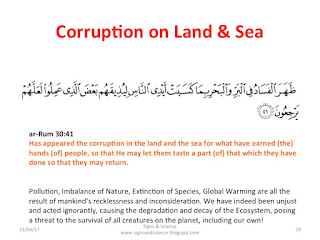
On this Earth, in this temporal life, we humans suffer hunger, lack of appropriate clothing, thirst, the Sun's excessive heat, and many other problems, diseases, etc. Many other creatures also suffer on Earth due to human activities, and some species even face extinction due to our adverse impact on the ecosystem. The Earth has suffered extinction events before. Scientists theorise that if humans were to become extinct, the Earth might recover from the damage caused to it, and flourish once again. The Quran (7:56) warns us to not to corrupt the Earth after it has been reformed:

Excerpt from The Mighty Ancients (presentation)
Surah alIsra begins with the declaration: سُبْحَانَ الَّذِي (Q17:1), for Allah, for having taken His servant Muhammad ﷺ on a journey we refer to as Mairaj (Ascension). Another fundamental principle of The Right Religion (الدِّينُالْقَيِّمُ), mentioned in Surah atTaubah, is about the sacred months, which I understand is about peace and security during pilgrimage travels. While scientists discuss escaping to another planet to inhabit, when this Earth is no longer habitable, we hope and pray that Allah will, having accepted our repentance in this life, forgive and guide us that day, in peace and security, and with honour and dignity, on a similar ascension, via the The Right Trajectory (الصِّرَاطَ الْمُسْتَقِيمَ), to the Gardens of Eternity.

Allah creates perfectly and governs excellently. We humans need to acknowledge and appreciate this fact, and consequently submit willingly to The Right Religion (الدِّينُ الْقَيِّمُ). We were created to worship and serve Allah. The most prestigious jobs in the worlds can be ours, eternally, if we submit and become of those who keep their duty (الْمُتَّقِينَ):

The contact prayer (الصَّلَاةَ) is in itself a combination of remembrance (recitation of Surah alFateha and other ayaat from The Quran) and glorification (تَسْبِيحَ):
وَإِذَا قُرِئَ الْقُرْآنُ فَاسْتَمِعُوا لَهُ وَأَنصِتُوا لَعَلَّكُمْ تُرْحَمُونَ
وَاذْكُر رَّبَّكَ فِي نَفْسِكَ تَضَرُّعًا وَخِيفَةً وَدُونَ الْجَهْرِ مِنَ الْقَوْلِ بِالْغُدُوِّ وَالْآصَالِ وَلَا تَكُن مِّنَ الْغَافِلِينَ
إِنَّ الَّذِينَ عِندَ رَبِّكَ لَا يَسْتَكْبِرُونَ عَنْ عِبَادَتِهِ وَيُسَبِّحُونَهُ وَلَهُ يَسْجُدُونَ
And when is recited the Quran, then listen to it and pay attention so that you may receive mercy.
And remember your Lord in your nafs humbly and (in) fear and without the loudness of [the] words, in the mornings and (in) the evenings. And (do) not be among the heedless.
Indeed, those who (are) near your Lord, they (do) not turn away in pride from His worship. And they glorify Him and to Him they prostrate.
Surah alIsra, which emphasises both contact prayers and glorification, concludes with the command:
وَقُلِ الْحَمْدُ لِلَّهِ الَّذِي لَمْ يَتَّخِذْ وَلَدًا وَلَمْ يَكُن لَّهُ شَرِيكٌ فِي الْمُلْكِ وَلَمْ يَكُن لَّهُ وَلِيٌّ مِّنَ الذُّلِّ وَكَبِّرْهُ تَكْبِيرًا
Say, "Invoke Allah or invoke the Most Gracious. By whatever (name) you invoke, to Him (belongs) the Most Beautiful Names. And (do) not be loud in your prayers and not be silent therein, but seek between that a way."
And say, "All Praise (is) for Allah the One Who has not taken a son and not is for Him a partner in the dominion, and not is for Him any protector out of weakness. And magnify Him (with all) magnificence."
And say, "All Praise (is) for Allah the One Who has not taken a son and not is for Him a partner in the dominion, and not is for Him any protector out of weakness. And magnify Him (with all) magnificence."
In Surah Taha, ayaat 14-15, Allah commands Moses to establish prayer (الصَّلَاةَ) for His Remembrance (لِذِكْرِي), as The Hour (السَّاعَةَ) is approaching when every nafs (نَفْسٍ) will be compensated (لِتُجْزَىٰ)... Moses supplicates for help. In his supplication, he especially mentions:
كَيْ نُسَبِّحَكَ كَثِيرًا
وَنَذْكُرَكَ كَثِيرًا
إِنَّكَ كُنتَ بِنَا بَصِيرًا
That we may glorify You much
And [we] remember You much.
Indeed, [You] You are of us All-Seer."
The Quran, however, clarifies and emphasises the importance of glorification (تَسْبِيحَ) as a separate distinct act of worship as well. In Surah anNoor, we read:
أَلَمْ تَرَ أَنَّ اللَّهَ يُسَبِّحُ لَهُ مَن فِي السَّمَاوَاتِ وَالْأَرْضِ وَالطَّيْرُ صَافَّاتٍ كُلٌّ قَدْ عَلِمَ صَلَاتَهُ وَتَسْبِيحَهُ وَاللَّهُ عَلِيمٌ بِمَا يَفْعَلُونَ
Do not you see that Allah - glorify Him whoever (is) in the heavens and the earth and the birds (with) wings outspread? Each one verily knows its prayer and its glorification. And Allah (is) All-Knower of what they do.
[Al-Quran 24:41]

The When & Why of تَسْبِيحَ
Timings for & Purpose of تَسْبِيحَ have been explained:
for Satisfaction/Contentment
for Satisfaction/Contentment
فَاصْبِرْ عَلَىٰ مَا يَقُولُونَ وَسَبِّحْ بِحَمْدِ رَبِّكَ قَبْلَ طُلُوعِ الشَّمْسِ وَقَبْلَ غُرُوبِهَا وَمِنْ آنَاءِ اللَّيْلِ فَسَبِّحْ وَأَطْرَافَ النَّهَارِ لَعَلَّكَ تَرْضَىٰ
So be patient over what they say and glorify with praise (of) your Lord before (the) rising (of) the sun and before its setting; and from (the) hours (of) the night, and glorify (at the) ends (of) the day so that you may be satisfied.
[Al-Quran 20:130]
to Patiently Endure
فَاصْبِرْ عَلَىٰ مَا يَقُولُونَ وَسَبِّحْ بِحَمْدِ رَبِّكَ قَبْلَ طُلُوعِ الشَّمْسِ وَقَبْلَ الْغُرُوبِ
وَمِنَ اللَّيْلِ فَسَبِّحْهُ وَأَدْبَارَ السُّجُودِ
وَمِنَ اللَّيْلِ فَسَبِّحْهُ وَأَدْبَارَ السُّجُودِ
So be patient over what they say and glorify (the) praise (of) your Lord, before (the) rising (of) the sun and before the setting, And of the night glorify Him and after the prostration.
to Patiently Await
وَاصْبِرْ لِحُكْمِ رَبِّكَ فَإِنَّكَ بِأَعْيُنِنَا وَسَبِّحْ بِحَمْدِ رَبِّكَ حِينَ تَقُومُ
وَمِنَ اللَّيْلِ فَسَبِّحْهُ وَإِدْبَارَ النُّجُومِ
So be patient, for (the) Command (of) your Lord, for indeed, you (are) in Our Eyes. And glorify (the) praise (of) your Lord when you arise, And of the night, glorify Him, and after the stars.
to Patiently Persevere
فَاصْبِرْ لِحُكْمِ رَبِّكَ وَلَا تُطِعْ مِنْهُمْ آثِمًا أَوْ كَفُورًا
وَاذْكُرِ اسْمَ رَبِّكَ بُكْرَةً وَأَصِيلًا
وَمِنَ اللَّيْلِ فَاسْجُدْ لَهُ وَسَبِّحْهُ لَيْلًا طَوِيلًا
So be patient for (the) Command (of) your Lord and (do) not obey from them any sinner or disbeliever.
And remember (the) name (of) your Lord morning and evening.
And of the night prostrate to Him, and glorify Him a night long.
So be patient for (the) Command (of) your Lord and (do) not obey from them any sinner or disbeliever.
And remember (the) name (of) your Lord morning and evening.
And of the night prostrate to Him, and glorify Him a night long.

Last updated on October 27, 2018


